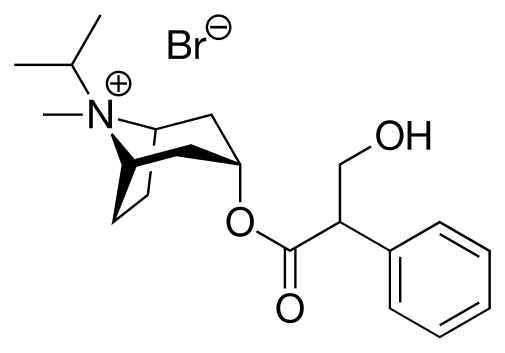
The belladonna alkaloids atropine and scopolamine are naturally occurring compounds derived from plants in the nightshade family. Their chemical structure as tertiary amines makes them lipid-soluble, allowing them to penetrate the central nervous system and to be absorbed orally. Ipratropium is a synthetic quaternary derivative of atropine that was engineered specifically to eliminate central nervous system penetration, making it a locally acting agent suitable for inhaled delivery. Understanding the structural basis of central nervous system access is the conceptual key to this entire drug class.
Atropine is a competitive antagonist at all five muscarinic receptor subtypes, making it the broadest-acting muscarinic blocker in clinical use. Because it is a tertiary amine, atropine is un-ionized at physiological pH, crosses the blood-brain barrier readily, and is absorbed after oral and intramuscular administration. This lack of receptor subtype selectivity means that atropine blocks muscarinic receptors in the heart, smooth muscle, exocrine glands, and central nervous system simultaneously, producing a full anticholinergic picture at higher doses.
The primary clinical indications for atropine follow directly from its mechanism. In the heart, vagal tone slows the sinoatrial node by activating muscarinic subtype 2 receptors; atropine blocks this vagal slowing and is used as the first-line treatment for symptomatic bradycardia and atrioventricular block. In toxicology, atropine is the antidote for organophosphate and carbamate poisoning, where it is given in large, rapidly escalating doses to counteract the life-threatening accumulation of acetylcholine — this indication was covered in depth in Module 3. In ophthalmology, topical atropine produces prolonged pupil dilation and paralysis of accommodation by blocking muscarinic subtype 3 receptors in the iris sphincter and ciliary muscle; the duration of effect from a single drop can last one to two weeks. Preoperatively, atropine reduces airway secretions and prevents reflex bradycardia during surgical airway manipulation.
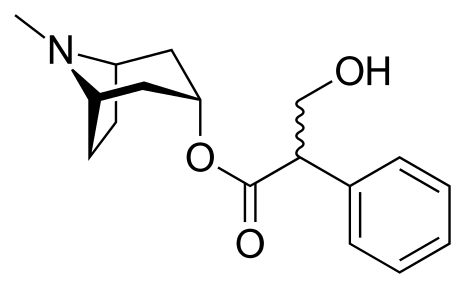
Scopolamine shares atropine's tertiary amine structure and muscarinic receptor targets, but has a slightly different ring structure that produces greater central nervous system penetration and a distinct clinical profile. At doses that produce modest peripheral anticholinergic effects, scopolamine causes sedation, amnesia, and suppression of nausea, making it pharmacologically distinct from atropine despite acting at the same receptors.
The principal clinical use of scopolamine is prevention and treatment of motion sickness. It works by blocking muscarinic input to the vestibular nuclei in the brainstem and to the vomiting center, interrupting the signal that translates vestibular mismatch into nausea. The transdermal patch formulation delivers drug at a steady rate for up to three days, avoiding the peaks and troughs of oral dosing. Scopolamine produces more pronounced central nervous system adverse effects than atropine at equivalent doses, including confusion and hallucinations, which limits its use in elderly patients.
Ipratropium is atropine with its nitrogen atom quaternized — that is, converted from a tertiary to a quaternary amine by adding a chemical group that gives the nitrogen a permanent positive charge. This charge prevents the molecule from crossing lipid membranes, which has two clinically important consequences: ipratropium cannot penetrate the blood-brain barrier, and it is not meaningfully absorbed from the lung surface after inhalation. The result is a drug that produces local bronchodilation without central nervous system effects or systemic cardiovascular effects at inhaled doses.
In the airways, ipratropium blocks muscarinic receptors on bronchial smooth muscle and on mucus-secreting glands, producing bronchodilation and modest reduction in secretions. In chronic obstructive pulmonary disease, parasympathetic tone is a significant driver of baseline bronchoconstriction, and ipratropium is a first-line bronchodilator for this reason. In acute severe asthma, ipratropium is used as an adjunct to short-acting beta-2 agonists because the two mechanisms are complementary and additive; ipratropium is not used as monotherapy for asthma maintenance.
The onset of bronchodilation from ipratropium is slower than from short-acting beta-2 agonists — approximately 15 to 30 minutes versus 3 to 5 minutes — which explains why the two are used together in acute settings rather than ipratropium alone.
Atropine: tertiary amine, crosses blood-brain barrier, non-selective at all five muscarinic receptor subtypes, given orally or by injection. Main uses: symptomatic bradycardia, organophosphate antidote, cycloplegia, preoperative antisialagogue.
Scopolamine: tertiary amine, greater central nervous system penetration than atropine, causes sedation and amnesia at low doses. Main use: motion sickness prevention via transdermal patch.
Ipratropium: quaternary ammonium, no blood-brain barrier penetration, less than 1 percent systemic absorption by inhalation, locally acting bronchodilator. Main uses: chronic obstructive pulmonary disease maintenance, adjunct in acute severe asthma.
All three are contraindicated in narrow-angle glaucoma, benign prostatic hyperplasia with obstruction, and obstructive gastrointestinal disease.
The development of organ-selective muscarinic antagonists was driven by the recognition that non-selective agents like atropine produce a broad and often intolerable spectrum of peripheral and central adverse effects. Selectivity has been pursued through two main strategies: preferential binding to the muscarinic subtype 3 receptor, which dominates bladder and airway smooth muscle, and pharmacokinetic restriction to the target organ through inhaled delivery or quaternary ammonium structure. No approved agent achieves complete selectivity, but the therapeutic window for organ-specific effects has been substantially improved over atropine.
Overactive bladder is characterized by urgency, frequency, and urge incontinence resulting from involuntary detrusor contractions. The detrusor muscle is predominantly controlled by muscarinic subtype 3 receptors, and blocking these receptors reduces the amplitude and frequency of involuntary contractions.
Oxybutynin was the first muscarinic antagonist developed specifically for overactive bladder. It is non-selective across muscarinic receptor subtypes and also has direct smooth muscle relaxant activity. The immediate-release oral formulation generates peak blood levels and high rates of dry mouth and cognitive impairment; the extended-release and transdermal formulations produce lower peak drug levels and fewer adverse effects. Despite being the oldest agent in the class, oxybutynin's anticholinergic adverse effect burden, particularly cognitive effects, makes it poorly tolerated in older adults.
Tolterodine was developed as a less lipophilic alternative with lower central nervous system penetration, translating to fewer cognitive adverse effects at equivalent bladder efficacy. Solifenacin and darifenacin are later-generation agents with preferential affinity for the muscarinic subtype 3 receptor; darifenacin has the highest subtype 3 selectivity of any approved agent, which in theory reduces cognitive risk by sparing the muscarinic subtype 1 receptors in the brain that mediate learning and memory. Fesoterodine is a prodrug that is converted to its active form by non-specific tissue enzymes rather than liver enzymes, giving a more predictable effect across patients regardless of individual differences in liver enzyme activity.
Trospium chloride is a quaternary ammonium compound, analogous to ipratropium, that cannot cross the blood-brain barrier. It is eliminated primarily in the urine unchanged, which means high drug concentrations reach the bladder directly. Trospium is considered the safest overactive bladder antimuscarinic in cognitively vulnerable patients, including those with dementia, because it produces no central nervous system anticholinergic effects.
Mirabegron is a beta-3 adrenoceptor agonist, not a muscarinic antagonist. It relaxes the detrusor muscle during the bladder filling phase by activating beta-3 receptors, which is the dominant adrenergic receptor in the bladder. Because mirabegron acts through a completely different receptor system, it carries no anticholinergic burden whatsoever. It is used as a first-line alternative when antimuscarinic adverse effects are limiting, and can be combined with an antimuscarinic for additive efficacy.
Ipratropium's relatively short duration of action — requiring four doses per day — was the impetus for developing long-acting muscarinic antagonists for chronic obstructive pulmonary disease maintenance. Tiotropium was the first once-daily inhaled antimuscarinic and remains the most widely studied agent in this class. Its long duration results from slow dissociation from muscarinic subtype 3 receptors in bronchial smooth muscle, sustaining bronchodilation for 24 hours from a single inhaled dose. Tiotropium reduces exacerbation frequency, improves lung function, and improves quality of life in chronic obstructive pulmonary disease. Aclidinium and umeclidinium are additional long-acting agents in the same class; umeclidinium is commonly used in fixed-dose combination with a long-acting beta-2 agonist for patients who require dual bronchodilator therapy. Long-acting muscarinic antagonists are not recommended as maintenance therapy in asthma without concurrent inhaled corticosteroids.
Anticholinergic burden refers to the cumulative muscarinic receptor blockade produced by all the drugs a patient takes simultaneously. Many commonly used drug classes carry significant anticholinergic effects beyond the dedicated antimuscarinic agents: first-generation antihistamines such as diphenhydramine, tricyclic antidepressants, certain antipsychotics, and antiarrhythmics like disopyramide all block muscarinic receptors as part of their pharmacological profile.
In older adults, accumulated anticholinergic burden is associated with cognitive impairment, falls, urinary retention, and increased mortality. The clinical implication is that prescribing any antimuscarinic agent in a patient already taking other drugs with anticholinergic activity requires a careful review of the total burden, not just assessment of the individual drug. When overactive bladder treatment is needed in a patient with dementia or cognitive vulnerability, trospium or mirabegron should be chosen over agents with central nervous system penetration.
Cognitively vulnerable patients or those with dementia: trospium (quaternary, no central nervous system penetration) or mirabegron (beta-3 agonist, zero anticholinergic burden) are preferred over agents that cross the blood-brain barrier.
Patients on polypharmacy: assess total anticholinergic burden before adding any antimuscarinic. Consider mirabegron as the first choice when burden is already high.
When any antimuscarinic is poorly tolerated: switch to mirabegron before escalating the antimuscarinic dose.
The central nervous system-penetrating muscarinic antagonists exploit an imbalance between cholinergic and dopaminergic activity in the striatum to treat movement disorders. The same central penetration that produces the therapeutic effect also produces dose-dependent cognitive adverse effects that become increasingly problematic in elderly patients and in those carrying a high cumulative anticholinergic burden from other medications.
In the striatum, dopaminergic neurons projecting from the midbrain normally suppress cholinergic interneuron activity. This balance between dopaminergic inhibition and cholinergic excitation is essential for smooth motor coordination. In Parkinson disease, the progressive loss of these dopaminergic neurons removes the suppression of cholinergic interneurons, creating relative cholinergic overactivity in the striatum. This imbalance contributes to the tremor and rigidity components of the Parkinson disease motor syndrome.
Benztropine and trihexyphenidyl are tertiary amine muscarinic antagonists that cross the blood-brain barrier and reduce cholinergic interneuron activity in the striatum, partially restoring the dopaminergic-cholinergic balance. Their therapeutic effect is narrow and selective: they reduce tremor and rigidity but have no meaningful benefit for bradykinesia or postural instability, the features that most impair function in Parkinson disease. Because of this limited efficacy and significant cognitive adverse effect risk, benztropine and trihexyphenidyl have been largely replaced by levodopa and dopamine agonists as the first-line treatment for Parkinson disease. They are currently used as second-line agents for tremor control in younger patients with Parkinson disease when dopaminergic therapy is insufficient.
Current guidelines recommend against using these agents in patients older than approximately 70 years with Parkinson disease. The central anticholinergic adverse effects — confusion, memory impairment, hallucinations, and delirium — are poorly tolerated in this population and are clinically difficult to distinguish from the cognitive decline that accompanies Parkinson disease itself, making management much harder.
Dopamine receptor subtype 2 blocking drugs — including typical antipsychotics like haloperidol and antiemetics like metoclopramide — can produce drug-induced extrapyramidal symptoms by reducing dopaminergic tone in the striatum, recreating the cholinergic-dopaminergic imbalance of Parkinson disease. The most acute and distressing of these reactions is acute dystonia, characterized by involuntary sustained muscle contractions producing abnormal postures.
Benztropine given intramuscularly or intravenously is the first-line treatment for acute dystonic reactions, producing rapid resolution within 5 to 15 minutes of parenteral administration. Diphenhydramine, a first-generation antihistamine with substantial anticholinergic activity, is an acceptable alternative at 50 mg intramuscularly or intravenously.
For chronic drug-induced parkinsonism in patients continuing antipsychotic therapy, oral benztropine or trihexyphenidyl can be used, but the preferred strategies are to reduce the antipsychotic dose, switch to an atypical antipsychotic with lower dopamine receptor subtype 2 affinity, or switch to an agent like clozapine or quetiapine that has intrinsic muscarinic antagonist activity — these agents rarely cause extrapyramidal symptoms because their anticholinergic properties counterbalance their dopamine blockade.
Cumulative anticholinergic drug exposure is associated with cognitive impairment and increased dementia risk, particularly in older adults. The mechanism involves progressive blockade of muscarinic receptors in brain regions that mediate learning and memory, including the hippocampus and prefrontal cortex. This association has been documented in prospective cohort studies and is dose-dependent: greater total anticholinergic exposure over time correlates with greater cognitive risk.
A particularly important clinical interaction occurs when a patient with Alzheimer disease is taking an acetylcholinesterase inhibitor — a drug whose mechanism is to increase acetylcholine levels in the brain — and is simultaneously prescribed any drug with significant anticholinergic activity. The anticholinergic drug directly opposes the pharmacological mechanism of the acetylcholinesterase inhibitor, negating its intended benefit. This situation is more common than might be expected, because the same patient population that receives acetylcholinesterase inhibitors — older adults with multiple comorbidities — is also the population most likely to receive bladder antimuscarinics, first-generation antihistamines for sleep, and tricyclic antidepressants for pain or depression.
When initiating acetylcholinesterase inhibitor therapy in a patient with Alzheimer disease, a systematic review of all other medications for anticholinergic activity is part of appropriate prescribing. Agents with high anticholinergic burden should be deprescribed or substituted with alternatives carrying less anticholinergic activity, such as second-generation antihistamines for allergy management or mirabegron for overactive bladder.
Avoid benztropine and trihexyphenidyl in Parkinson disease patients older than approximately 70 years: cognitive adverse effects are poorly tolerated and clinically indistinguishable from Parkinson disease dementia.
High anticholinergic burden drugs to deprescribe or avoid in older adults: first-generation antihistamines (diphenhydramine), tricyclic antidepressants (amitriptyline), bladder antimuscarinics with central nervous system penetration (oxybutynin immediate release), and anticholinergic antipsychotics.
When starting acetylcholinesterase inhibitor therapy for Alzheimer disease: systematically eliminate all high-anticholinergic-burden medications to avoid pharmacological opposition.
The anticholinergic toxidrome results from competitive muscarinic receptor blockade across all target organs simultaneously — the heart, exocrine glands, smooth muscle of the gastrointestinal tract and urinary bladder, the eye, and the central nervous system. Recognizing it quickly and distinguishing it from the cholinergic toxidrome is a high-stakes emergency diagnosis, because the two syndromes look superficially similar in a confused, agitated patient but require opposite treatments.
The mnemonic "hot as a hare, dry as a bone, red as a beet, blind as a bat, mad as a hatter" encodes the cardinal features of anticholinergic toxicity and remains the most efficient memory aid for bedside recognition.
"Hot as a hare" refers to hyperthermia. Eccrine sweat glands are cholinergically innervated at muscarinic receptors on the gland itself; when these are blocked, sweating stops, and the body's primary heat dissipation mechanism fails. In a warm environment or during agitation, temperature can rise to dangerous levels.
"Dry as a bone" refers to the blockade of all exocrine secretion — salivary glands, lacrimal glands, bronchial mucus glands, and sweat glands. Patients have dry mouth, dry eyes, dry skin, and may complain of blurred vision from inability to produce tears.
"Red as a beet" refers to cutaneous flushing from peripheral vasodilation. When sweating is abolished, the body attempts to dissipate heat through increased skin blood flow — the only remaining mechanism — producing a flushed appearance.
"Blind as a bat" refers to mydriasis (fixed, dilated pupils from loss of muscarinic-mediated pupilloconstrictor tone) and cycloplegia (paralysis of accommodation from ciliary muscle blockade). Patients cannot focus on near objects and are sensitive to bright light.
"Mad as a hatter" refers to the central nervous system effects: agitation, confusion, disorientation, and visual and tactile hallucinations. In severe toxicity, seizures and coma can occur. The central nervous system features are what drive clinical urgency and what the antidote physostigmine specifically reverses.
Additional features not captured in the mnemonic include tachycardia (loss of vagal slowing of the sinoatrial node), urinary retention (detrusor relaxation with preservation of the internal urethral sphincter), and decreased bowel sounds with ileus.
The most common causes of clinically significant anticholinergic toxicity are first-generation antihistamines (the leading cause in children, with diphenhydramine being the most frequently implicated), tricyclic antidepressant overdose (where sodium channel blockade adds electrocardiographic QRS complex prolongation and ventricular arrhythmias to the anticholinergic picture), antipsychotic overdose, scopolamine, and plant toxins from Jimsonweed (Datura stramonium), which contains atropine and scopolamine as active alkaloids. Combination over-the-counter products containing antihistamines are a common pediatric source.
Physostigmine is a reversible acetylcholinesterase inhibitor that, unlike neostigmine and pyridostigmine, crosses the blood-brain barrier. By inhibiting the enzyme that degrades acetylcholine, physostigmine raises acetylcholine levels at both peripheral and central muscarinic receptors, reversing the anticholinergic blockade. It is the specific antidote for central anticholinergic toxicity, effective for reversing delirium, agitation, and hallucinations within minutes of intravenous administration.
The absolute contraindication to physostigmine is suspected tricyclic antidepressant overdose. Tricyclic antidepressants block cardiac sodium channels in addition to muscarinic receptors, causing QRS complex prolongation on the electrocardiogram. Physostigmine administered in the setting of sodium channel blockade has caused fatal bradyarrhythmias and asystole. Before giving physostigmine, an electrocardiogram must be checked; QRS complex prolongation is a hard stop. If tricyclic antidepressant overdose is possible, physostigmine is contraindicated regardless of the severity of anticholinergic symptoms.
Anticholinergic: hot, dry, flushed skin; mydriasis; tachycardia; urinary retention; decreased bowel sounds; agitation and hallucinations. The single most useful bedside sign is dry skin — the patient is not sweating.
Cholinergic (from organophosphate or carbamate poisoning): wet, diaphoretic, pale; miosis; bradycardia; urinary and fecal incontinence; bronchospasm and bronchorrhea; muscle fasciculations; seizures. The patient is excessively wet and secreting from all glands.
Treatment is opposite: physostigmine (carefully, with electrocardiogram screening) for central anticholinergic toxicity; atropine plus pralidoxime plus benzodiazepines for cholinergic toxicity from organophosphates.
Physostigmine is absolutely contraindicated in tricyclic antidepressant overdose. Check the electrocardiogram for QRS complex prolongation before every administration.
Autonomic dysfunction describes conditions in which the reflex mechanisms that normally maintain cardiovascular stability during postural change are impaired. This section was deferred from the earlier autonomic nervous system modules because the pharmacological management of autonomic dysfunction draws on principles from across the autonomic pharmacology series — mineralocorticoids, alpha-1 agonists, norepinephrine precursors, and beta-blockers all play roles depending on the underlying mechanism. Understanding the pathophysiology is prerequisite to selecting the right drug.
Orthostatic hypotension is defined as a sustained drop in systolic blood pressure of at least 20 millimeters of mercury or diastolic blood pressure of at least 10 millimeters of mercury within three minutes of standing. Normally, standing causes gravitational blood pooling in the lower extremities, which is detected by baroreceptors in the carotid sinus and aorta; this triggers reflex sympathetic activation that increases heart rate and peripheral vascular resistance, restoring blood pressure and cerebral perfusion within seconds. Symptoms of orthostatic hypotension — lightheadedness, near-fainting, or fainting — arise when this compensatory reflex fails.
Neurogenic orthostatic hypotension occurs when the sympathetic nervous system pathway itself is damaged, most commonly in Parkinson disease with autonomic involvement, multiple system atrophy, and diabetic autonomic neuropathy. The key distinguishing feature of neurogenic orthostatic hypotension is the absence of compensatory tachycardia on standing — because the sympathetic pathway is damaged, the heart cannot accelerate to compensate for the blood pressure drop. In contrast, non-neurogenic orthostatic hypotension (from dehydration, medications, or cardiac pump failure) is accompanied by a compensatory increase in heart rate, because the sympathetic system is intact.
Non-pharmacological measures are always the starting point: compression stockings and abdominal binders reduce venous pooling; increased salt and fluid intake expands plasma volume; head-of-bed elevation at night reduces supine hypertension while improving morning blood pressure. These measures alone may be insufficient in severe neurogenic disease, at which point drug therapy is added.
Fludrocortisone is a synthetic mineralocorticoid that acts on the kidney to retain sodium and water, expanding plasma volume. It enhances the pressor response to standing by increasing the volume available for the heart to pump. Adverse effects reflect its mineralocorticoid mechanism and include supine hypertension, edema, and potassium loss.
Midodrine is a prodrug that is converted in peripheral tissues to an active alpha-1 adrenoceptor agonist. By constricting peripheral arterioles and veins, it raises blood pressure in the standing position. Midodrine does not cross the blood-brain barrier, so it has no central nervous system effects. Because it also constricts vessels in the supine position, it must not be taken within four to six hours of bedtime — supine hypertension during sleep is the main adverse effect to avoid.
Droxidopa is a synthetic amino acid that is converted directly to norepinephrine by a decarboxylase enzyme present throughout the body. It is particularly useful when sympathetic nerve terminals are still present but are unable to synthesize enough norepinephrine — a situation that occurs in some forms of Parkinson disease and in dopamine beta-hydroxylase deficiency. Unlike midodrine, which is a receptor agonist, droxidopa restores the neurotransmitter itself.
Postural orthostatic tachycardia syndrome is defined as a heart rate increase of 30 beats per minute or more within 10 minutes of standing, in the absence of orthostatic hypotension, accompanied by symptoms of orthostatic intolerance such as lightheadedness, palpitations, and fatigue. Unlike neurogenic orthostatic hypotension, blood pressure is maintained in postural orthostatic tachycardia syndrome, but the compensatory tachycardia is exaggerated beyond what is physiologically necessary.
The underlying mechanisms are heterogeneous and include relative hypovolemia, partial sympathetic denervation of the lower limbs producing pooling and reflex tachycardia, and impaired norepinephrine clearance. Non-pharmacological management — volume expansion with salt and fluid, compression garments, and graded exercise — is the foundation of treatment.
When pharmacological rate control is needed, low-dose propranolol is one of the most commonly used agents. Propranolol reduces heart rate by blocking cardiac beta-1 adrenoceptors, attenuating the exaggerated tachycardia. It must be used cautiously in patients with the hyperadrenergic subtype of postural orthostatic tachycardia syndrome, where elevated catecholamine levels are present — blocking peripheral beta-2 vasodilator receptors in this context can paradoxically worsen blood pressure. Ivabradine, which lowers heart rate through a different mechanism without affecting blood pressure, is used as an alternative when beta-blocker adverse effects are limiting.
Diabetic autonomic neuropathy is a common complication of long-standing diabetes that damages both sympathetic and parasympathetic fibers throughout the body. It is underdiagnosed because its manifestations are diverse and often attributed to other causes.
Cardiovascular manifestations include resting tachycardia (from loss of vagal tone to the sinoatrial node), exercise intolerance, and orthostatic hypotension from damage to sympathetic vasomotor fibers — treated with fludrocortisone and midodrine as described above. Silent myocardial ischemia is a serious consequence: because sympathetic pain fibers from the heart are damaged, patients with diabetic autonomic neuropathy may have coronary artery disease without chest pain, masking the diagnosis.
Gastrointestinal manifestations include gastroparesis — delayed gastric emptying from vagal efferent damage — producing early satiety, nausea, and erratic glycemic control after meals; and alternating constipation and diarrhea from colonic and small bowel dysmotility. Neurogenic bladder, presenting initially as reduced bladder sensation and large residual urine volumes, is a genitourinary consequence.
Management of diabetic autonomic neuropathy is primarily directed at optimizing glycemic control to slow progression, supplemented by symptom-specific pharmacotherapy for each organ system affected.
Neurogenic orthostatic hypotension: fludrocortisone (mineralocorticoid — expands plasma volume) plus midodrine (alpha-1 agonist prodrug — constricts peripheral vessels; avoid at bedtime) plus droxidopa (norepinephrine precursor — useful when sympathetic terminals are intact but norepinephrine synthesis is impaired).
Postural orthostatic tachycardia syndrome: non-pharmacological measures first; low-dose propranolol for rate control (use cautiously in hyperadrenergic subtype); ivabradine as alternative when propranolol is not tolerated.
All agents that raise standing blood pressure: monitor for supine hypertension. Non-pharmacological measures precede or accompany drug therapy in all cases.
| Author / Organization | Title | Source |
|---|---|---|
| Eglen RM | Muscarinic receptor subtypes in neuronal and non-neuronal cholinergic function | Auton Autacoid Pharmacol. 2006;26(3):219-233. |
| Eddleston M, Buckley NA, Eyer P, Dawson AH | Management of acute organophosphorus pesticide poisoning | Lancet. 2008;371(9612):597-607. |
| Nachum Z, Shahal B, Shupak A, et al. | Scopolamine bioavailability in combined oral and transdermal delivery | J Pharmacol Exp Ther. 2001;296(1):121-125. |
| Tashkin DP, Celli B, Senn S, et al. | A 4-year trial of tiotropium in chronic obstructive pulmonary disease | N Engl J Med. 2008;359(15):1543-1554. |
| Chapple CR, Cardozo L, Steers W, et al. | Solifenacin significantly improves all symptoms of overactive bladder syndrome | Int J Clin Pract. 2006;60(8):959-966. |
| Khullar V, Amarenco G, Angulo JC, et al. | Efficacy and tolerability of mirabegron, a beta3-adrenoceptor agonist, in patients with overactive bladder | Eur Urol. 2013;63(2):283-295. |
| Kerwin EM, D'Urzo AD, Gelb AF, et al. | Efficacy and safety of a 12-week treatment with twice-daily aclidinium bromide in COPD patients | COPD. 2012;9(2):90-101. |
| Gray SL, Anderson ML, Dublin S, et al. | Cumulative use of strong anticholinergics and incident dementia: a prospective cohort study | JAMA Intern Med. 2015;175(3):401-407. |
| Bhidayasiri R, Fahn S, Weiner WJ, et al. | Evidence-based guideline: treatment of tardive syndromes | Neurology. 2013;81(5):463-469. |
| Salahudeen MS, Nishtala PS | An overview of pharmacodynamic modelling, ligand-binding approach and its application in clinical practice | Saudi Pharm J. 2017;25(2):165-175. |
| Rudolph JL, Salow MJ, Angelini MC, McGlinchey RE | The anticholinergic risk scale and anticholinergic adverse effects in older persons | Arch Intern Med. 2008;168(5):508-513. |
| Watkins JW, Schwarz ES, Arroyo-Plasencia AM, Mullins ME | The use of physostigmine by toxicologists in anticholinergic toxicity | J Med Toxicol. 2015;11(2):179-184. |
| Burns TM, Mauermann ML | The evaluation of polyneuropathies | Neurology. 2011;76(7 Suppl 2):S6-S13. |
| Freeman R, Wieling W, Axelrod FB, et al. | Consensus statement on the definition of orthostatic hypotension, neurally mediated syncope and the postural tachycardia syndrome | Auton Neurosci. 2011;161(1-2):46-48. |
| Kaufmann H, Norcliffe-Kaufmann L, Palma JA, et al. | Natural history of pure autonomic failure: a United States prospective cohort | Ann Neurol. 2017;81(2):287-297. |
| Sheldon RS, Grubb BP, Olshansky B, et al. | 2015 Heart Rhythm Society expert consensus statement on the diagnosis and treatment of postural tachycardia syndrome, inappropriate sinus tachycardia, and vasovagal syncope | Heart Rhythm. 2015;12(6):e41-e63. |
| Vinik AI, Maser RE, Mitchell BD, Freeman R | Diabetic autonomic neuropathy | Diabetes Care. 2003;26(5):1553-1579. |