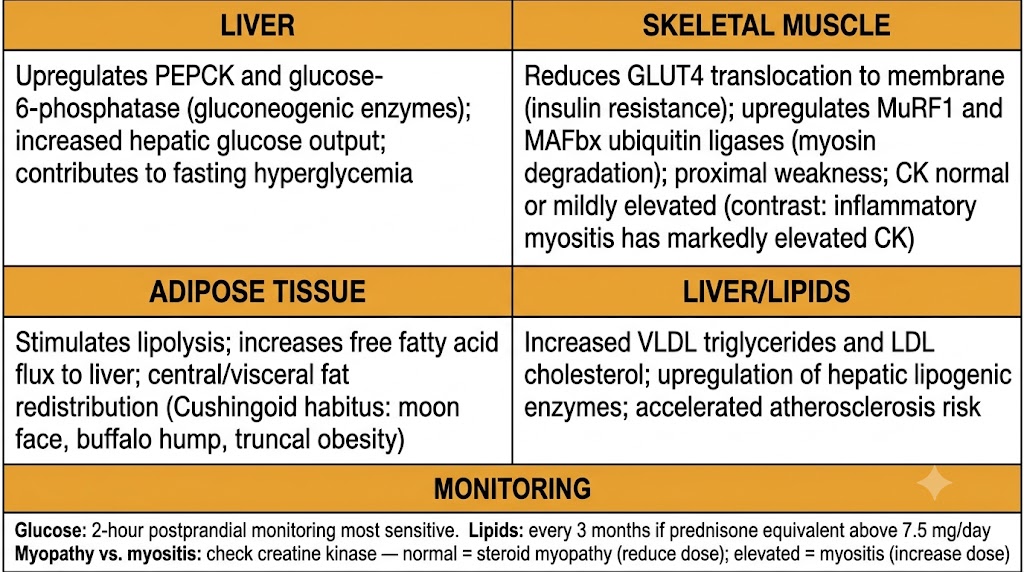
The metabolic adverse effects of glucocorticoids arise from glucocorticoid receptor-mediated transactivation of metabolic gene programs that evolved to mobilize substrates during acute stress. Sustained pharmacological activation of these programs produces the constellation of iatrogenic Cushing syndrome: hyperglycemia, central adiposity, dyslipidemia, and skeletal muscle atrophy.
Glucocorticoid-induced hyperglycemia results from simultaneous stimulation of hepatic glucose production and suppression of peripheral glucose utilization. In the liver, glucocorticoid receptor transactivation upregulates the gluconeogenic enzymes phosphoenolpyruvate carboxykinase and glucose-6-phosphatase, increasing glucose output from amino acid and glycerol substrates. In skeletal muscle and adipose tissue, glucocorticoids reduce glucose transporter type 4 (GLUT4) translocation to the plasma membrane in response to insulin, impairing insulin-stimulated glucose uptake independently of changes in circulating insulin.
The resulting pattern is predominantly postprandial hyperglycemia — fasting glucose is mildly elevated, but afternoon and evening excursions after meals are more pronounced. This differs from the predominantly fasting pattern of early type 2 diabetes, and means hemoglobin A1c underestimates postprandial dysglycemia if glucocorticoid therapy began within the preceding 8 to 12 weeks. Point-of-care glucose at 2 hours after the largest meal is the most sensitive monitoring strategy. In pre-existing diabetes, glucocorticoid therapy often requires acute escalation of antidiabetic medications.
Glucocorticoid-induced dyslipidemia is characterized by elevated total cholesterol, low-density lipoprotein cholesterol, and triglycerides (via very low-density lipoprotein). The mechanism involves upregulation of hepatic lipogenic enzymes, increased free fatty acid flux from glucocorticoid-stimulated lipolysis in adipose tissue, and reduced low-density lipoprotein receptor expression. Lipid monitoring at baseline and every 3 months with statin initiation at standard cardiovascular risk thresholds is appropriate for patients on long-term therapy above a prednisone equivalent of 7.5 mg per day.
Steroid myopathy presents as symmetrical proximal limb weakness from glucocorticoid receptor-dependent upregulation of the ubiquitin ligases MuRF1 and MAFbx, which target myofibrillar proteins for proteasomal degradation, combined with suppression of muscle protein synthesis. Creatine kinase is normal or mildly elevated — in contrast to inflammatory myositis where creatine kinase is markedly elevated. This distinction matters: inflammatory myopathy is treated with increased glucocorticoids; steroid myopathy requires dose reduction. Fluorinated glucocorticoids (dexamethasone, triamcinolone) carry higher myopathy risk than non-fluorinated agents at equivalent anti-inflammatory doses.
Glucocorticoids affect the central nervous system and eyes through dose-dependent mechanisms that are underrecognized in clinical practice. Neuropsychiatric effects span from therapeutic mood elevation at low doses to frank psychosis at high doses. Ophthalmic complications are structural and require baseline evaluation before prolonged therapy.
Neuropsychiatric adverse effects follow a dose-dependent spectrum reflecting glucocorticoid receptor density in limbic structures (hippocampus, amygdala, prefrontal cortex). At low to moderate doses (prednisone equivalent up to 20 mg per day), mild euphoria, improved energy, and insomnia are common — often experienced as beneficial short-term but contributing to difficulty tapering. At moderate to high doses (20 to 60 mg per day), irritability, emotional lability, anxiety, and significant insomnia emerge. At high doses (greater than 60 mg per day), serious psychiatric complications including major depression, mania, and frank psychosis (steroid psychosis) occur in approximately 5 to 10% of patients. Steroid psychosis typically resolves within days to weeks of dose reduction but may require temporary antipsychotic treatment.
Posterior subcapsular cataract develops with both systemic and topical glucocorticoids (including inhaled and intranasal) through glucocorticoid receptor-dependent effects on lens epithelial cells that promote protein aggregate accumulation in the posterior subcapsular region. Development is slow (months to years), dose- and duration-dependent, and correlates with cumulative lifetime dose more than current dose. Early presentation is glare and difficulty with night driving; central vision is preserved until late stages. Baseline slit-lamp examination is recommended before initiating therapy anticipated to exceed 6 months, with annual examination thereafter.
Approximately 30 to 40% of patients on long-term systemic glucocorticoids develop elevated intraocular pressure, with 5 to 10% reaching levels sufficient to produce glaucomatous optic nerve damage. The mechanism is glucocorticoid receptor activation in trabecular meshwork cells, upregulating myocilin and extracellular matrix proteins that increase outflow resistance for aqueous humor. The intraocular pressure response is heritable and more common in individuals with primary open-angle glaucoma and their first-degree relatives. Intraocular pressure monitoring every 3 months during long-term therapy is standard; refer to ophthalmology for pressure greater than 21 mmHg.
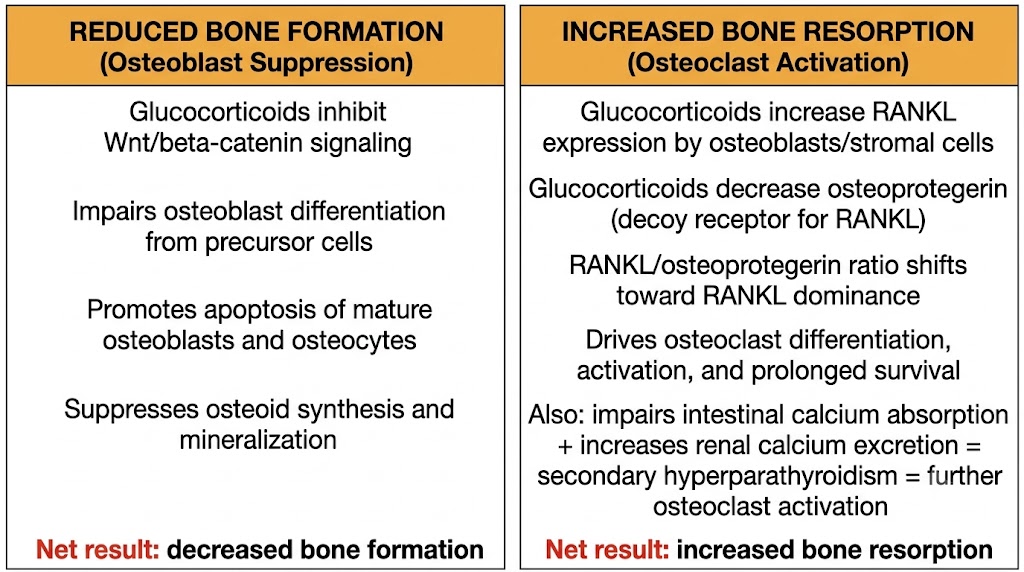
Glucocorticoid-induced osteoporosis is the most common cause of secondary osteoporosis. Fracture risk exceeds what bone mineral density alone predicts because glucocorticoids impair bone quality through mechanisms beyond simple bone loss. Prevention is pharmacologically well-supported and should be initiated proactively.
Glucocorticoids attack bone remodeling on both sides simultaneously. On the formation side, they suppress osteoblast differentiation by inhibiting Wnt/beta-catenin signaling and induce apoptosis of mature osteoblasts and osteocytes. On the resorption side, they increase RANKL expression by osteoblasts and stromal cells while suppressing osteoprotegerin (the decoy receptor that neutralizes RANKL), shifting the RANKL-to-osteoprotegerin ratio toward osteoclast activation. Additionally, glucocorticoids impair intestinal calcium absorption and increase renal calcium excretion, producing secondary hyperparathyroidism that further drives osteoclast activity.
At any given bone mineral density T-score, glucocorticoid-treated patients have higher fracture probability than glucocorticoid-naive patients because bone quality deteriorates faster than density. The FRAX algorithm should be adjusted upward approximately 15% for major fracture probability and 20% for hip fracture probability in patients on prednisone greater than 7.5 mg per day for more than 3 months, to capture bone quality effects not measured by dual-energy X-ray absorptiometry.
For any patient initiating glucocorticoid therapy anticipated to last 3 or more months: start calcium 1000 to 1200 mg per day and vitamin D 600 to 800 international units per day universally. For medium or high fracture risk (FRAX-adjusted 10-year major fracture probability greater than 10 to 20%), add oral bisphosphonate therapy — alendronate 70 mg weekly or risedronate 35 mg weekly. Intravenous zoledronic acid annually is the alternative for patients with upper gastrointestinal intolerance or poor oral adherence.
Cardiovascular and infectious complications contribute substantially to the excess morbidity of long-term glucocorticoid therapy. Both are dose-dependent, mechanistically grounded, and partially preventable with targeted monitoring and prophylaxis.
Glucocorticoid-induced hypertension arises through multiple parallel mechanisms: at pharmacological concentrations, glucocorticoids overwhelm the 11-beta-hydroxysteroid dehydrogenase type 2 enzyme that normally inactivates cortisol before it reaches the mineralocorticoid receptor in the distal nephron, causing sodium and water retention through epithelial sodium channel upregulation. Glucocorticoids also suppress endothelial nitric oxide synthase, reducing nitric oxide-mediated vasodilation, and increase vascular sensitivity to vasopressors including angiotensin II and catecholamines by upregulating their receptors on vascular smooth muscle. This mineralocorticoid overflow effect is most prominent with hydrocortisone and prednisolone, which have intrinsic mineralocorticoid activity.
Accelerated atherosclerosis is multifactorial: suppressed prostacyclin synthesis with preserved thromboxane A2 shifts the prostanoid balance toward platelet aggregation and vasoconstriction; central adiposity driven by glucocorticoid receptor-induced lipoprotein lipase upregulation in visceral fat generates a pro-inflammatory adipokine milieu; and compounding effects from hypertension, dyslipidemia, and hyperglycemia create a convergent cardiovascular risk burden. Atrial fibrillation risk is approximately doubled at high glucocorticoid doses, partly through hypokalemia from mineralocorticoid overflow and partly through direct glucocorticoid receptor effects on atrial cardiomyocyte electrical remodeling.
Common bacterial infections (pneumonia, urinary tract infection, skin and soft tissue infection) increase approximately 2-fold at prednisone equivalent doses above 10 mg per day. Opportunistic infections reflecting cell-mediated immunity impairment become clinically relevant above 20 mg per day for more than 4 weeks. Pneumocystis jirovecii pneumonia is the most consistently preventable opportunistic infection: prophylaxis with trimethoprim-sulfamethoxazole one double-strength tablet three times weekly is the standard when prednisone equivalent exceeds 20 mg per day for more than 4 weeks in glucocorticoid monotherapy, or 10 mg per day for more than 4 weeks when combined with additional immunosuppressants. For sulfonamide intolerance, alternatives are dapsone 100 mg daily or atovaquone 1500 mg daily.
Herpes zoster reactivation is significantly increased in glucocorticoid-treated patients. Recombinant zoster vaccine (Shingrix) is recommended for patients 50 and older before initiating therapy or between cycles at the lowest immunosuppressive burden. The live attenuated varicella vaccine is contraindicated in significantly immunosuppressed patients. Tuberculosis reactivation requires interferon-gamma release assay or tuberculin skin test screening before long-term therapy in patients with risk factors; latent tuberculosis should be treated with isoniazid prophylaxis before beginning glucocorticoid therapy when possible. Pneumococcal vaccination is recommended for all adult patients on pharmacological glucocorticoid therapy regardless of age.
Glucocorticoid drug interactions divide into pharmacokinetic interactions that alter plasma concentrations through cytochrome P450 3A4 modulation, and pharmacodynamic interactions that compound organ-specific toxicities. Steroid-sparing agents are pharmacologically necessary in any patient requiring prednisone equivalent above 7.5 mg per day for more than 3 months.
Cytochrome P450 3A4 inducers accelerate glucocorticoid metabolism and can reduce prednisolone exposure by 45 to 75%. The most clinically significant inducers are rifampin (which has caused acute transplant rejection by reducing glucocorticoid levels below the therapeutic threshold), phenytoin, carbamazepine, phenobarbital, and efavirenz. Patients on these combinations require higher glucocorticoid doses; when the inducer is discontinued, the previously compensatory dose may become toxic as normal enzyme activity returns over 2 to 4 weeks.
Cytochrome P450 3A4 inhibitors increase glucocorticoid concentrations and can produce iatrogenic Cushing syndrome at standard doses. Key inhibitors: azole antifungals (ketoconazole, itraconazole, voriconazole), clarithromycin, and ritonavir-boosted antiretroviral regimens. The ritonavir-fluticasone inhaled corticosteroid combination raises fluticasone levels approximately 350-fold and can cause Cushing syndrome even with standard inhaled doses; beclomethasone (not a cytochrome P450 3A4 substrate) is the preferred inhaled corticosteroid alternative in this population.
The glucocorticoid-warfarin interaction produces variable international normalized ratio changes through effects on hepatic factor synthesis and protein binding competition; the international normalized ratio should be measured within 1 to 2 weeks of initiating or significantly changing a glucocorticoid dose in any patient on warfarin. The interaction with nonsteroidal anti-inflammatory drugs is pharmacodynamic: both independently suppress prostaglandin-mediated gastric mucosal defense, and their combination produces approximately 15-fold increased risk of peptic ulcer complications compared with neither drug alone (versus approximately 3-fold for each alone). Proton pump inhibitor prophylaxis is indicated when both agents are used simultaneously.
| Author / Organization | Title | Source |
|---|---|---|
| Schacke H et al. | Mechanisms involved in the side effects of glucocorticoids | Pharmacol Ther. 2002;96(1):23–43 |
| Liu D et al. | A practical guide to the monitoring and management of the complications of systemic corticosteroid therapy | Allergy Asthma Clin Immunol. 2013;9(1):30 |
| Huscher D et al. | Dose-related patterns of glucocorticoid-induced side effects | Ann Rheum Dis. 2009;68(7):1119–1124 |
| Henzen C et al. | Suppression and recovery of adrenal response after short-term, high-dose glucocorticoid treatment | Lancet. 2000;355(9203):542–545 |
| Warrington TP, Bostwick JM | Psychiatric adverse effects of corticosteroids | Mayo Clin Proc. 2006;81(10):1361–1367 |
| Jones R, Rhee DJ | Corticosteroid-induced ocular hypertension and glaucoma | Curr Opin Ophthalmol. 2006;17(2):163–167 |
| Weinstein RS | Glucocorticoid-induced bone disease | N Engl J Med. 2011;365(1):62–70 |
| Kanis JA et al. | A meta-analysis of prior corticosteroid use and fracture risk | J Bone Miner Res. 2004;19(6):893–899 |
| Buckley L et al. | 2017 ACR Guideline for the Prevention and Treatment of Glucocorticoid-Induced Osteoporosis | Arthritis Rheumatol. 2017;69(8):1521–1537 |
| Saag KG et al. | Teriparatide or alendronate in glucocorticoid-induced osteoporosis | N Engl J Med. 2007;357(20):2028–2039 |
| Souverein PC et al. | Use of oral glucocorticoids and risk of cardiovascular and cerebrovascular disease | Heart. 2004;90(8):859–865 |
| Baddley JW et al. | Non-viral opportunistic infections in new users of tumour necrosis factor inhibitor therapy (SABER study) | Ann Rheum Dis. 2014;73(11):1942–1948 |
| Czock D et al. | Pharmacokinetics and pharmacodynamics of systemically administered glucocorticoids | Clin Pharmacokinet. 2005;44(1):61–98 |
| Stone JH et al. | Trial of tocilizumab in giant-cell arteritis | N Engl J Med. 2017;377(4):317–328 |