Chapter 11  ·  Antilipidemic Drugs

Section 1

Mechanism of Action

How statins lower low-density lipoprotein cholesterol at the molecular level

Statins are competitive inhibitors of 3-hydroxy-3-methylglutaryl coenzyme A reductase, the rate-limiting enzyme in the mevalonate pathway for hepatic cholesterol synthesis. Their mechanism of action operates through a cascade of compensatory responses that ultimately increase the number of low-density lipoprotein receptors on the liver cell surface — the primary driver of low-density lipoprotein cholesterol reduction in the plasma.
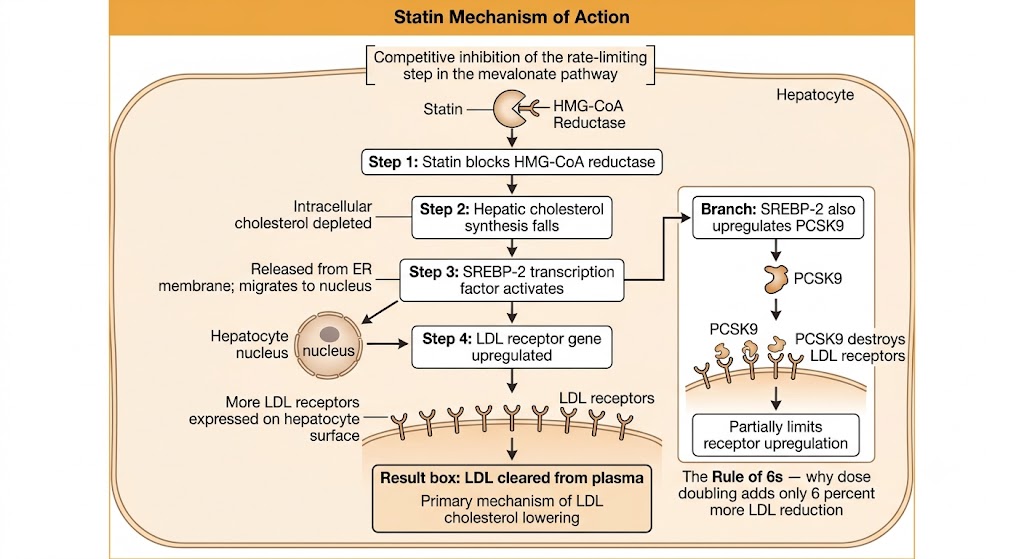
Flow diagram inside a hepatocyte showing statin mechanism: HMG-CoA reductase inhibition leads to reduced cholesterol synthesis, SREBP-2 activation, LDL receptor upregulation, and increased LDL clearance from plasma, with a counterregulatory branch showing PCSK9 co-induction partially limiting receptor upregulation.
Mechanism of action of statins showing HMG-CoA reductase inhibition, compensatory LDL receptor upregulation via the SREBP-2 pathway, and the counterregulatory role of PCSK9. Figure generated by Gemini AI.

The Mevalonate Pathway and HMG-CoA Reductase

The mevalonate pathway is the hepatic route for cholesterol synthesis. The rate-limiting step is the conversion of 3-hydroxy-3-methylglutaryl coenzyme A to mevalonate, catalyzed by 3-hydroxy-3-methylglutaryl coenzyme A reductase. Statins are structural analogs of 3-hydroxy-3-methylglutaryl coenzyme A that bind competitively to the active site of this enzyme, blocking mevalonate production and thereby interrupting the entire downstream pathway that leads to cholesterol synthesis.

The mevalonate pathway also produces non-sterol isoprenoid intermediates that have broad cellular functions beyond cholesterol. The inhibition of these intermediates is thought to underlie the pleiotropic effects of statins — anti-inflammatory, endothelial, and antithrombotic effects discussed in Section 4 — and may also contribute to certain adverse effects including muscle toxicity.

Compensatory Low-Density Lipoprotein Receptor Upregulation

When statin-induced inhibition of 3-hydroxy-3-methylglutaryl coenzyme A reductase lowers intracellular cholesterol in liver cells, the cell activates a compensatory response mediated by the sterol regulatory element-binding protein 2 transcription factor. This transcription factor is released from its endoplasmic reticulum anchor, migrates to the nucleus, and upregulates the gene for the low-density lipoprotein receptor on the hepatocyte surface.

The resulting increase in low-density lipoprotein receptor expression dramatically accelerates the clearance of low-density lipoprotein, intermediate-density lipoprotein, very low-density lipoprotein remnants, and lipoprotein(a) from plasma. This receptor upregulation — not direct inhibition of cholesterol in the blood — is the primary mechanism by which statins lower plasma low-density lipoprotein cholesterol. Statins also modestly reduce hepatic secretion of very low-density lipoprotein, producing a secondary reduction in triglycerides.

Proprotein Convertase Subtilisin/Kexin Type 9 Co-induction — The Rule of 6s

Statin-induced sterol regulatory element-binding protein 2 activation upregulates not only the low-density lipoprotein receptor but also proprotein convertase subtilisin/kexin type 9, because the proprotein convertase subtilisin/kexin type 9 gene contains the same sterol regulatory element-binding protein 2 response element. Since proprotein convertase subtilisin/kexin type 9 directs low-density lipoprotein receptors toward lysosomal degradation, this co-induction partially offsets the receptor upregulation that statins produce — a built-in counterregulatory brake on statin efficacy.

This feedback explains why the statin dose-response curve follows a log-linear relationship that plateaus: each doubling of the statin dose from any starting point yields only approximately six percent additional low-density lipoprotein cholesterol reduction. This pharmacological principle — known as the rule of 6s — has direct clinical implications. It is the reason why, when a patient is not at the low-density lipoprotein cholesterol target on maximally tolerated statin, the guideline recommendation is to add a second agent (ezetimibe or a proprotein convertase subtilisin/kexin type 9 inhibitor) rather than to simply double the statin dose. The proprotein convertase subtilisin/kexin type 9 co-induction also explains why proprotein convertase subtilisin/kexin type 9 inhibitors are synergistic with statins: statins upregulate more low-density lipoprotein receptors, and proprotein convertase subtilisin/kexin type 9 inhibitors protect those receptors from degradation.

The Rule of 6s — Clinical Implication

Doubling the statin dose from any point on the dose-response curve adds only approximately six percent additional low-density lipoprotein cholesterol reduction. Going from atorvastatin 40 mg to 80 mg adds about six percent more reduction while meaningfully increasing adverse effect risk. When the low-density lipoprotein cholesterol target is not met on the current statin dose, adding ezetimibe or a proprotein convertase subtilisin/kexin type 9 inhibitor is more effective and better tolerated than dose escalation beyond the effective ceiling.

Section 2

Pharmacokinetics and Drug Interactions

How individual statins differ in metabolism, selectivity, and interaction risk

All statins share the same primary mechanism but differ substantially in lipophilicity, cytochrome P450 metabolism, and hepatic selectivity. These pharmacokinetic differences determine which drug interactions apply to which statins and drive the practical selection of one agent over another in specific patient populations.

Reference table comparing five statins by lipophilicity, metabolic pathway, and drug interaction risk, with a warning box summarizing key high-risk drug combinations including gemfibrozil, cyclosporine, and strong CYP3A4 inhibitors.
Pharmacokinetic classification of statins by lipophilicity and cytochrome P450 metabolism, with drug interaction risk and preferred use cases. Figure generated by Gemini AI.

Lipophilic versus Hydrophilic Statins

Lipophilic statins — atorvastatin, simvastatin, lovastatin, fluvastatin, and pitavastatin — passively diffuse across cell membranes and distribute broadly to tissues including skeletal muscle. Hydrophilic statins — rosuvastatin and pravastatin — rely on active hepatic uptake transporters and demonstrate greater selectivity for the liver. The greater tissue distribution of lipophilic statins, particularly into skeletal muscle, is thought to contribute to their somewhat higher risk of muscle-related adverse effects.

Cytochrome P450 Metabolism and Interaction Risk

The most clinically consequential pharmacokinetic difference among statins is their dependence on cytochrome P450 3A4 for metabolism. Atorvastatin, simvastatin, and lovastatin are all cytochrome P450 3A4 substrates. Co-administration with cytochrome P450 3A4 inhibitors — including azole antifungals (itraconazole, ketoconazole), macrolide antibiotics (clarithromycin, erythromycin), human immunodeficiency virus protease inhibitors, diltiazem, verapamil, amiodarone, and grapefruit juice — can raise statin plasma concentrations several-fold, dramatically increasing the risk of muscle toxicity up to and including rhabdomyolysis.

Simvastatin carries the highest interaction risk because it is administered as an inactive prodrug that requires activation before cytochrome P450 3A4 oxidation, and its metabolites have a short half-life leaving little buffer against concentration spikes. Simvastatin 80 mg is restricted to patients who have already tolerated it for at least twelve months without muscle problems; it should not be initiated in new patients. Atorvastatin, while also cytochrome P450 3A4-metabolized, has active metabolites with a longer effective duration and is somewhat more forgiving.

Rosuvastatin undergoes minimal cytochrome P450 metabolism and relies mainly on hepatic uptake transporters for its action. This gives it the lowest cytochrome P450 drug interaction risk of any statin and makes it the preferred choice when a patient requires a potent cytochrome P450 3A4 inhibitor long-term. Pravastatin uses non-cytochrome P450 metabolic pathways (sulfation and hydroxylation) and is particularly useful in organ transplant patients on cyclosporine, where it has the best-established safety record. Fluvastatin is a cytochrome P450 2C9 substrate; cytochrome P450 2C9 inhibitors such as fluconazole and amiodarone increase its exposure.

The Gemfibrozil-Statin Interaction

Gemfibrozil is a fibrate that potently inhibits both hepatic uptake transporters and the metabolic pathways that clear statin lactone forms from the body. The resulting elevation in statin plasma concentrations substantially increases the risk of muscle toxicity and rhabdomyolysis with every statin. Fenofibrate does not share this interaction mechanism and is the preferred fibrate when combination therapy with a statin is clinically necessary.

Statin Lipophilicity Primary Metabolism Key Interaction Risk Notable Use Case
Atorvastatin Lipophilic Cytochrome P450 3A4 Moderate — cap at 20 mg with strong inhibitors Most versatile; first choice for most patients
Rosuvastatin Hydrophilic Minimal cytochrome P450 Low — preferred with cytochrome P450 3A4 inhibitors Most potent per milligram; preferred with drug interactions
Simvastatin Lipophilic Cytochrome P450 3A4 prodrug High — contraindicated with strong cytochrome P450 3A4 inhibitors; 80 mg restricted Largely replaced by atorvastatin/rosuvastatin for high intensity
Pravastatin Hydrophilic Non-cytochrome P450 Low — preferred in transplant patients on cyclosporine Solid organ transplant recipients
Lovastatin Lipophilic Cytochrome P450 3A4 High — same as simvastatin Largely of historical use; avoid with cytochrome P450 3A4 inhibitors
Fluvastatin Lipophilic Cytochrome P450 2C9 Low-moderate — affected by cytochrome P450 2C9 inhibitors Low potency; limited current use
Pitavastatin Lipophilic Minimal cytochrome P450 Low Moderate potency; low interaction profile

High-Risk Combinations to Know

Simvastatin or lovastatin plus a strong cytochrome P450 3A4 inhibitor (itraconazole, clarithromycin, human immunodeficiency virus protease inhibitors) — contraindicated; high rhabdomyolysis risk.

Any statin plus gemfibrozil — avoid; use fenofibrate instead when a fibrate is needed alongside a statin.

Any statin plus cyclosporine — dose reduction required; pravastatin or fluvastatin preferred.


Section 3

Statin Intensity Classification

High-, moderate-, and low-intensity regimens and their expected low-density lipoprotein cholesterol reductions

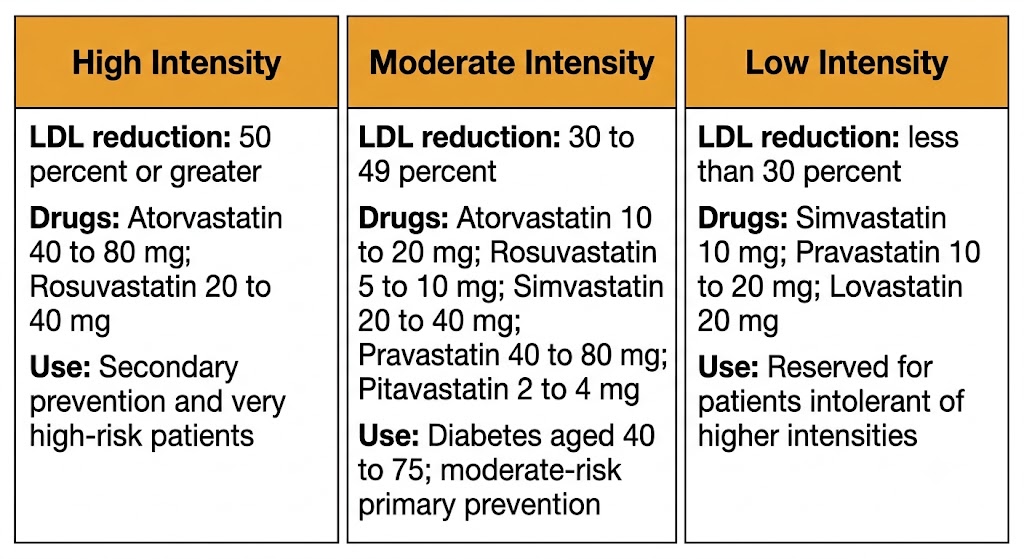
The 2018 American College of Cardiology/American Heart Association guideline on the management of blood cholesterol classifies statin regimens into three intensity tiers based on the expected percentage reduction in low-density lipoprotein cholesterol from an untreated baseline. Intensity selection is the first clinical decision after establishing that a patient warrants statin therapy.

Three-panel diagram showing statin intensity classification: high intensity achieving 50 percent or greater LDL reduction with atorvastatin 40 to 80 mg and rosuvastatin 20 to 40 mg, moderate intensity achieving 30 to 49 percent reduction with multiple agents, and low intensity achieving less than 30 percent reduction reserved for patients intolerant of higher intensities.
Statin intensity classification by expected LDL cholesterol reduction from untreated baseline, with prototype agents and clinical indications for each tier. Figure generated by Gemini AI.

Greatest reduction

High Intensity

  • Expected low-density lipoprotein cholesterol reduction ≥50%
  • Atorvastatin 40–80 mg daily
  • Rosuvastatin 20–40 mg daily
  • First choice for secondary prevention and very high-risk patients

Standard reduction

Moderate Intensity

  • Expected low-density lipoprotein cholesterol reduction 30–49%
  • Atorvastatin 10–20 mg daily
  • Rosuvastatin 5–10 mg daily
  • Simvastatin 20–40 mg; Pravastatin 40–80 mg
  • Pitavastatin 2–4 mg

Minimal reduction

Low Intensity

  • Expected low-density lipoprotein cholesterol reduction <30%
  • Simvastatin 10 mg; Pravastatin 10–20 mg
  • Lovastatin 20 mg; Pitavastatin 1 mg
  • Reserved for patients who cannot tolerate higher intensities

Intensity Selection in Practice

High-intensity statin therapy is recommended for all patients with established atherosclerotic cardiovascular disease (secondary prevention) and for patients with low-density lipoprotein cholesterol of 190 milligrams per deciliter or higher. Moderate-intensity therapy is the starting point for most primary prevention patients and for patients with diabetes aged 40 to 75. Low-intensity therapy is appropriate only for patients who cannot tolerate higher intensities due to adverse effects, and should always be combined with a reassessment of whether add-on non-statin therapy is indicated.


Section 4

Pleiotropic Effects

Benefits beyond low-density lipoprotein cholesterol lowering

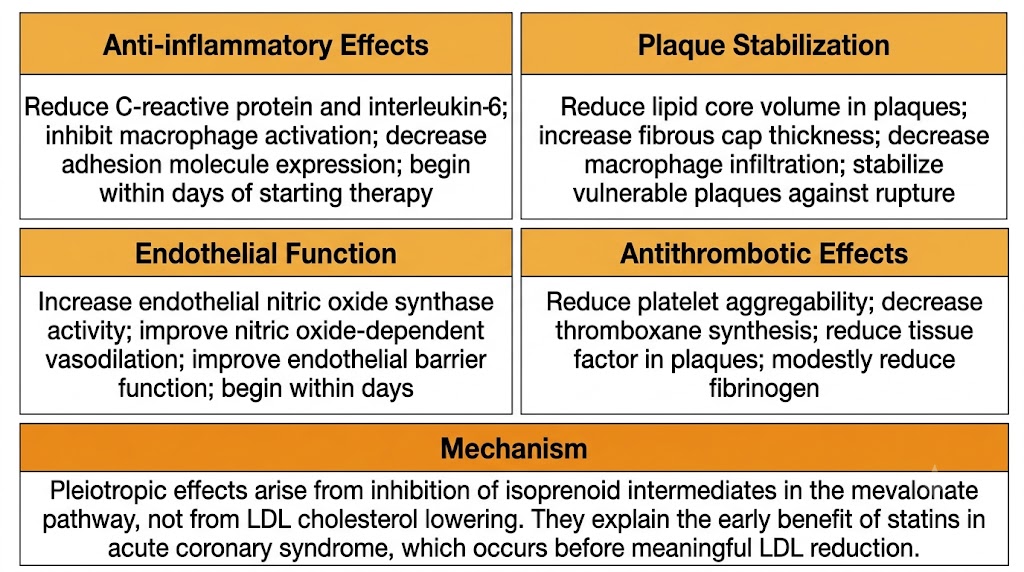
Beyond their primary effect on low-density lipoprotein cholesterol, statins exert a range of additional biological effects through inhibition of non-sterol isoprenoid intermediates in the mevalonate pathway. These pleiotropic effects are pharmacologically real and contribute to clinical benefit, particularly in high-risk settings such as acute coronary syndrome.

Four-panel diagram showing statin pleiotropic effects by biological system: anti-inflammatory effects reducing C-reactive protein and cytokines, plaque stabilization increasing fibrous cap thickness and reducing lipid core, improved endothelial function via nitric oxide synthase, and antithrombotic effects reducing platelet aggregability, with a shared mechanism note explaining origin in isoprenoid intermediate inhibition.
Pleiotropic effects of statins beyond LDL cholesterol lowering, mediated through inhibition of isoprenoid intermediates in the mevalonate pathway. Figure generated by Gemini AI.

Anti-inflammatory Effects

Statins reduce circulating levels of high-sensitivity C-reactive protein and other inflammatory markers independently of their low-density lipoprotein cholesterol-lowering effect. This anti-inflammatory action arises from the inhibition of isoprenoid intermediates required for the post-translational modification of small signaling proteins that regulate inflammatory pathways in vascular endothelium and macrophages. The clinical implication is that statins may benefit patients with elevated systemic inflammation even when low-density lipoprotein cholesterol is not markedly elevated.

Plaque Stabilization

High-intensity statin therapy reduces the lipid core of atherosclerotic plaques, increases fibrous cap thickness, and decreases macrophage infiltration. These changes collectively stabilize vulnerable plaques against rupture, which is the proximate cause of most acute coronary syndrome events. Plaque stabilization is thought to explain the early separation of event curves seen in acute coronary syndrome trials, where benefit appears within weeks — far too early to be explained by gradual reversal of atherosclerosis from low-density lipoprotein cholesterol lowering alone.

Improved Endothelial Function

Statins increase endothelial nitric oxide synthase activity, leading to improved nitric oxide-dependent vasodilation. This effect begins within days of statin initiation, well before meaningful low-density lipoprotein cholesterol reduction occurs. Improved endothelial function contributes to the early clinical benefits observed in acute coronary syndrome and helps explain the rapid anti-ischemic effects of statin initiation in this setting.

Antithrombotic Effects

Statins reduce platelet aggregability and thromboxane synthesis, and decrease tissue factor expression in atherosclerotic plaques. These antithrombotic properties modestly reduce the thrombotic response to plaque rupture and may contribute to the disproportionately rapid benefit of statins in the acute coronary syndrome setting.

Pleiotropic Effects — Clinical Perspective

Pleiotropic effects are real but should not be used to justify subtherapeutic statin dosing. The large meta-analyses of statin trials demonstrate that clinical event reduction scales consistently with the degree of low-density lipoprotein cholesterol lowering achieved, regardless of which statin is used. Low-density lipoprotein cholesterol reduction is the dominant driver of benefit. Pleiotropic effects contribute at the margins, particularly in the acute and inflammatory settings, but do not substitute for achieving the low-density lipoprotein cholesterol target.


Section 5

Clinical Use — Acute Coronary Syndrome and Practical Prescribing

When to start statins, at what intensity, and how to manage non-adherence

Understanding the evidence base for statins translates directly into prescribing decisions. The most important principles concern when to use high-intensity versus moderate-intensity therapy, how to respond when low-density lipoprotein cholesterol targets are not met, and how to manage the clinically consequential problem of statin discontinuation.

Statins in Acute Coronary Syndrome — Start Early and at High Intensity

High-intensity statin therapy should be initiated within the first twenty-four hours of an acute coronary syndrome presentation, regardless of the patient's baseline low-density lipoprotein cholesterol level or prior statin use. This recommendation is based on the pleiotropic effects described in Section 4, which produce anti-inflammatory, plaque-stabilizing, and endothelial-protective benefits that begin within days — well before the gradual low-density lipoprotein cholesterol reduction from sustained therapy.

The standard acute coronary syndrome regimen is atorvastatin 40 to 80 mg or rosuvastatin 20 to 40 mg started within twenty-four hours. A fasting lipid panel should be checked four to six weeks after initiation to assess the low-density lipoprotein cholesterol response and establish a new treated baseline. If the low-density lipoprotein cholesterol remains above 70 milligrams per deciliter on maximally tolerated statin, ezetimibe is added next. If the target remains unmet on statin plus ezetimibe, a proprotein convertase subtilisin/kexin type 9 inhibitor is considered.

The Lower-Is-Better Principle

The pivotal statin trials collectively established that greater reductions in low-density lipoprotein cholesterol produce greater reductions in cardiovascular events, with no apparent floor below which additional lowering fails to provide benefit. High-intensity therapy in secondary prevention consistently outperforms moderate-intensity therapy. This principle — lower is better — is the pharmacological rationale for the escalating treatment approach now embedded in cardiovascular guidelines: optimize statin intensity, then add non-statin agents systematically until the low-density lipoprotein cholesterol target is achieved.

Statin Discontinuation — A Clinically Consequential Problem

Stopping statin therapy in patients with established atherosclerotic cardiovascular disease is associated with increased risk of recurrent myocardial infarction and death. The loss of pleiotropic stabilizing effects on vulnerable plaque — particularly the anti-inflammatory and endothelial-protective effects — occurs rapidly after discontinuation and may temporarily destabilize the plaque environment before a new steady state is reached.

When a patient reports statin-related muscle symptoms, the appropriate response is not immediate discontinuation but rather a systematic approach: confirm that the symptoms are truly statin-related (many are not), try dose reduction, switch to a different statin with a more favorable pharmacokinetic profile, or consider alternate-day dosing with rosuvastatin, which has a long enough half-life to maintain some receptor upregulation even with less frequent dosing. Outright discontinuation should be reserved for confirmed rhabdomyolysis or severe intolerance, not for mild myalgia that may resolve with agent substitution.

Prescribing Summary — Key Clinical Rules

Start high-intensity statin within 24 hours of acute coronary syndrome — do not wait for lipid results.

When the low-density lipoprotein cholesterol target is not met on maximally tolerated statin, add ezetimibe first (inexpensive, generic), then a proprotein convertase subtilisin/kexin type 9 inhibitor if needed.

Avoid gemfibrozil with any statin — use fenofibrate if a fibrate is required alongside statin therapy.

When strong cytochrome P450 3A4 inhibitors are required long-term, switch to rosuvastatin or pravastatin rather than using cytochrome P450 3A4-metabolized statins at reduced doses.

Address statin intolerance proactively through agent substitution or dose adjustment — discontinuation in secondary prevention patients carries real cardiovascular risk.


Suggested References
Author / Organization Title Source
Baigent C, Blackwell L, Emberson J, et al; Cholesterol Treatment Trialists Collaboration. Efficacy and safety of more intensive lowering of LDL cholesterol: a meta-analysis of data from 170,000 participants in 26 randomised trials. Lancet. 2010;376(9753):1670–1681
Liao JK, Laufs U. Pleiotropic effects of statins. Annu Rev Pharmacol Toxicol. 2005;45:89–118
Goldstein JL, Brown MS. A century of cholesterol and coronaries: from plaques to genes to statins. Cell. 2015;161(1):161–172
Wiggins BS, Saseen JJ, Page RL 2nd, et al. Recommendations for management of clinically significant drug-drug interactions with statins and select agents used in patients with cardiovascular disease. Circulation. 2016;134(21):e468–e495
Grundy SM, Stone NJ, Bailey AL, et al. 2018 AHA/ACC Guideline on the Management of Blood Cholesterol. J Am Coll Cardiol. 2019;73(24):e285–e350
Scandinavian Simvastatin Survival Study Group. Randomised trial of cholesterol lowering in 4444 patients with coronary heart disease: the Scandinavian Simvastatin Survival Study (4S). Lancet. 1994;344(8934):1383–1389
Seidah NG, Awan Z, Chrétien M, Mbikay M. PCSK9: a key modulator of cardiovascular health. Circ Res. 2014;114(6):1022–1036
Heart Protection Study Collaborative Group. MRC/BHF Heart Protection Study of cholesterol lowering with simvastatin in 20,536 high-risk individuals: a randomised placebo-controlled trial. Lancet. 2002;360(9326):7–22
Mach F, Baigent C, Catapano AL, et al. 2019 ESC/EAS Guidelines for the management of dyslipidaemias. Eur Heart J. 2020;41(1):111–188
Ridker PM, Danielson E, Fonseca FA, et al; JUPITER Study Group. Rosuvastatin to prevent vascular events in men and women with elevated C-reactive protein. N Engl J Med. 2008;359(21):2195–2207
LaRosa JC, Grundy SM, Waters DD, et al; Treating to New Targets Investigators. Intensive lipid lowering with atorvastatin in patients with stable coronary disease. N Engl J Med. 2005;352(14):1425–1435
Cannon CP, Braunwald E, McCabe CH, et al; PROVE IT–TIMI 22 Investigators. Intensive versus moderate lipid lowering with statins after acute coronary syndromes. N Engl J Med. 2004;350(15):1495–1504