Introduction to Medical Pharmacology
BRAF/MEK, CDK4/6, PI3K/mTOR, BTK, BCL-2, PARP, FLT3/IDH, and proteasome inhibitors
ONC2 — Module 2 of 4Section 1
Paradoxical activation, combination rationale, and cardiovascular monitoring
BRAF (v-raf murine sarcoma viral oncogene homolog B) and MEK (mitogen-activated extracellular signal-regulated kinase) inhibitors are the cornerstones of targeted therapy for BRAF V600E-mutant melanoma, while CDK4/6 (cyclin-dependent kinase 4 and 6) inhibitors have transformed the treatment of hormone receptor-positive, HER2 (human epidermal growth factor receptor 2)-negative breast cancer. Both drug classes require understanding of specific pharmacogenomic contexts and carry distinctive toxicity profiles.
The BRAF V600E mutation (valine-to-glutamate substitution at codon 600) constitutively activates BRAF kinase, driving continuous signaling through the mitogen-activated protein kinase pathway — the sequential cascade of RAS (rat sarcoma viral proto-oncogene), RAF, MEK, and ERK (extracellular signal-regulated kinase) — that promotes tumor cell proliferation and survival. BRAF V600E occurs in approximately 50 percent of cutaneous melanomas, 60 percent of papillary thyroid carcinomas, and 10 percent of colorectal cancers. BRAF mutation testing is required before starting any BRAF inhibitor.
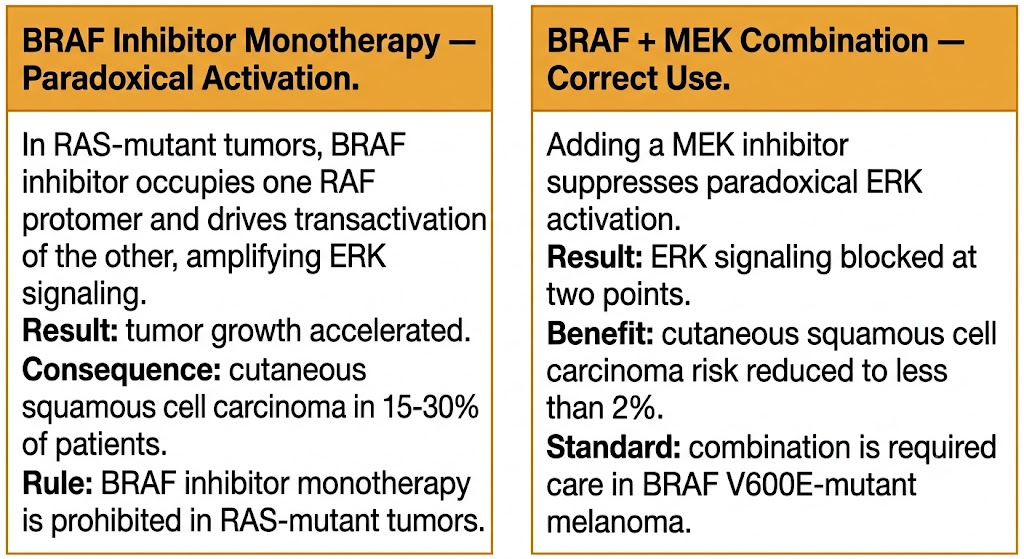
A paradox defines the most important safety concept for this drug class: when BRAF inhibitors are given as monotherapy in tumors that also carry RAS mutations (for example, colorectal cancers with KRAS mutations), they paradoxically activate ERK signaling rather than suppressing it. This happens because the drug, by occupying one copy of the RAF dimer, drives transactivation of the other RAF copy, amplifying downstream signaling. The clinical consequences are that BRAF inhibitor monotherapy accelerates growth of pre-existing RAS-mutant lesions — producing cutaneous squamous cell carcinomas and keratoacanthomas in 15 to 30 percent of patients on monotherapy — and is ineffective and potentially harmful in RAS-mutant cancers. Adding a MEK inhibitor suppresses this paradoxical activation and is the required standard of care.
Vemurafenib and dabrafenib are selective oral inhibitors of mutant BRAF V600E. Both are metabolized primarily by cytochrome P450 3A4 and are susceptible to interactions with cytochrome P450 3A4 inducers (rifampin, carbamazepine — which reduce efficacy) and inhibitors (azole antifungals, clarithromycin — which increase toxicity). Vemurafenib additionally inhibits cytochrome P450 1A2 and can induce cytochrome P450 3A4 at higher concentrations. Dabrafenib is also metabolized by cytochrome P450 2C8.
Dabrafenib causes dose-dependent fever (pyrexia) in approximately 28 percent of patients, a unique toxicity reflecting BRAF inhibition in temperature-regulatory pathways. It requires dose interruption and short-course corticosteroids in severe cases. Vemurafenib causes photosensitivity (strict sun protection required) and QTc prolongation. Both agents are used in combination with MEK inhibitors — dabrafenib with trametinib, vemurafenib with cobimetinib, or encorafenib with binimetinib.
Trametinib and cobimetinib are allosteric, non-competitive inhibitors of MEK1 and MEK2, suppressing ERK phosphorylation downstream of all RAF isoforms. Trametinib is metabolized mainly by deacetylation with minor cytochrome P450 3A4 involvement; cobimetinib is a cytochrome P450 3A4 substrate. The BRAF-plus-MEK inhibitor combinations reduce cutaneous squamous cell carcinoma incidence from approximately 20 percent with monotherapy to less than 2 percent. The combination toxicity profile includes dermatologic effects (hyperkeratosis, hand-foot skin reaction, rash), ocular toxicity from MEK inhibitors (serous retinal detachment, blurred vision — requires periodic ophthalmologic monitoring), cardiomyopathy with reduced ejection fraction from trametinib (approximately 7 to 11 percent; requires baseline echocardiogram and monitoring every 8 to 12 weeks), and liver enzyme elevation. For BRAF V600E-mutant colorectal cancer, where EGFR reactivation limits standard BRAF/MEK combination therapy, the approved regimen is encorafenib with cetuximab (an anti-EGFR monoclonal antibody).
Cyclin-dependent kinases 4 and 6 phosphorylate the retinoblastoma protein, releasing transcription factors that drive cell cycle entry into S-phase. In estrogen receptor-positive, HER2-negative breast cancer, estrogen-driven overexpression of cyclin D1 makes this pathway a rational target. Palbociclib, ribociclib, and abemaciclib all competitively inhibit the adenosine triphosphate-binding site of cyclin-dependent kinase 4 and 6, arresting cells in G1 phase. All three are approved in combination with aromatase inhibitors or fulvestrant, with superior progression-free survival established in the PALOMA-2 (palbociclib), MONALEESA (ribociclib), and MONARCH (abemaciclib) trials.
All three are oral cytochrome P450 3A4 substrates, requiring dose reduction with strong cytochrome P450 3A4 inhibitors and avoidance of strong inducers. Palbociclib absorption is increased by food. Ribociclib is a moderate cytochrome P450 3A4 inhibitor and prolongs the QTc interval — a baseline electrocardiogram and repeat at day 14 of cycle 1 are mandatory; the drug is held if QTc exceeds 480 milliseconds. Abemaciclib is dosed continuously (twice daily) rather than on the 3-weeks-on, 1-week-off schedule of palbociclib and ribociclib, and is the only agent approved as monotherapy in heavily pretreated disease.
The dominant shared toxicity is neutropenia — on-target, typically non-febrile, and reversible within one to two weeks of dose interruption without requiring growth factor support. Complete blood count monitoring is required before each cycle and at day 14 of the first two cycles. Abemaciclib causes substantially more diarrhea than the other two (approximately 80 percent; grade 3 in 10 percent), addressed with loperamide and dose reduction. Ribociclib causes liver enzyme elevation requiring monitoring. Venous thromboembolism risk is elevated across the class.
BRAF Inhibitor Monotherapy — Contraindicated in RAS-Mutant Tumors
Vemurafenib and dabrafenib must never be used as monotherapy in RAS-mutant tumors. Paradoxical MAPK activation accelerates tumor growth and provides no clinical benefit. Verify BRAF V600E mutation status and RAS mutation status before initiating any BRAF inhibitor. In BRAF V600E-mutant colorectal cancer, use encorafenib plus cetuximab — not BRAF/MEK combination — because EGFR feedback reactivation limits the combination's efficacy in this tumor type.
Section 2
Hyperglycemia, immune toxicity, atrial fibrillation, and perioperative bleeding risk
The phosphoinositide 3-kinase (PI3K), protein kinase B (AKT), and mechanistic target of rapamycin (mTOR) pathway governs cell survival, growth, and metabolism and is one of the most frequently activated oncogenic cascades in human cancer. BTK (Bruton's tyrosine kinase) inhibitors have transformed the treatment of B-cell malignancies by targeting chronic B-cell receptor signaling.
Idelalisib selectively inhibits the PI3K-delta isoform, which is dominant in B lymphocytes. It is approved for relapsed chronic lymphocytic leukemia, follicular lymphoma, and small lymphocytic lymphoma. Its toxicity profile is driven by immune dysregulation: hepatotoxicity (liver enzyme elevation grade 3 or higher in 20 to 40 percent of patients, requiring monthly monitoring and drug interruption), immune-mediated colitis resembling inflammatory bowel disease (approximately 14 percent), and serious opportunistic infections including Pneumocystis jirovecii pneumonia and cytomegalovirus reactivation. Pneumocystis jirovecii pneumonia prophylaxis with trimethoprim-sulfamethoxazole is mandatory throughout idelalisib therapy. Idelalisib is also a strong cytochrome P450 3A4 inhibitor, substantially increasing exposure of co-administered cytochrome P450 3A4 substrates.
Alpelisib selectively inhibits PI3K-alpha and is approved for PIK3CA-mutant, estrogen receptor-positive, HER2-negative breast cancer in combination with fulvestrant after endocrine therapy progression. PIK3CA mutation testing (tissue or plasma assay) is required as a companion diagnostic. The defining toxicity is hyperglycemia (approximately 64 percent; grade 3 or higher in 37 percent), reflecting PI3K-alpha's role in insulin-mediated glucose uptake — insulin resistance is the mechanism, not impaired insulin secretion. Fasting glucose monitoring before each cycle is mandatory. Severe cutaneous reactions including Stevens-Johnson syndrome have been reported. Diarrhea occurs in approximately 58 percent of patients.
Everolimus and temsirolimus are rapamycin analogs (rapalogs) that inhibit mechanistic target of rapamycin complex 1 by binding FK506-binding protein 12, which then allosterically inhibits the mTOR kinase domain. Inhibiting mechanistic target of rapamycin complex 1 reduces protein synthesis, induces autophagy, and suppresses vascular endothelial growth factor production. Everolimus is oral (approximately 20 percent bioavailability fasted; food increases absorption), extensively metabolized by cytochrome P450 3A4 and P-glycoprotein, and approved for estrogen receptor-positive breast cancer (with exemestane), renal cell carcinoma, pancreatic neuroendocrine tumors, and tuberous sclerosis complex. Temsirolimus is intravenous.
The dominant toxicities of mechanistic target of rapamycin inhibitors are stomatitis (oral mucositis in 40 to 60 percent; treat with corticosteroid mouthwash, not antifungals), non-infectious pneumonitis (10 to 14 percent; bilateral ground-glass opacities on imaging; treat with dose interruption and corticosteroids if symptomatic), hyperglycemia, hypertriglyceridemia, and increased infection risk from immunosuppression. Strong cytochrome P450 3A4 inhibitors increase everolimus exposure and require dose reduction; strong inducers reduce exposure and should be avoided.
Bruton's tyrosine kinase is a key kinase in the B-cell receptor signaling cascade, driving B-cell survival, proliferation, and tissue homing. Ibrutinib is an irreversible, covalent inhibitor of Bruton's tyrosine kinase at cysteine 481 but also inhibits multiple off-target kinases including ITK (interleukin-2-inducible T-cell kinase), EGFR, and SRC-family kinases, producing distinctive additional toxicities. Acalabrutinib and zanubrutinib are second-generation agents with greater selectivity for Bruton's tyrosine kinase, resulting in improved tolerability. All three are approved for chronic lymphocytic leukemia, mantle cell lymphoma, and other B-cell malignancies.
All Bruton's tyrosine kinase inhibitors are oral, extensively metabolized by cytochrome P450 3A4, and require dose adjustment with strong cytochrome P450 3A4 inhibitors or avoidance of strong inducers. Acalabrutinib bioavailability is reduced approximately 50 percent by proton pump inhibitors due to pH-dependent solubility; histamine-2 receptor blockers taken two hours before are preferred. Ibrutinib has low oral bioavailability (approximately 3 to 4 percent fasted), increased approximately twofold with food. Zanubrutinib has approximately 60 percent bioavailability and less sensitivity to gastric pH.
The most clinically significant Bruton's tyrosine kinase inhibitor toxicities are atrial fibrillation, bleeding, and hypertension. Atrial fibrillation occurs in 6 to 16 percent of ibrutinib-treated patients — higher than with acalabrutinib or zanubrutinib — attributed to off-target inhibition of ITK and C-terminal Src kinase in atrial cardiomyocytes. Ibrutinib also inhibits cytochrome P450 2C9 (elevating warfarin levels) and P-glycoprotein (increasing direct oral anticoagulant levels), while simultaneously causing platelet dysfunction through Bruton's tyrosine kinase and TEC kinase inhibition in platelets. This combination of atrial fibrillation, impaired platelet function, and drug interactions with anticoagulants creates a high-risk bleeding scenario. If anticoagulation is required, acalabrutinib or zanubrutinib are preferred over ibrutinib. Ibrutinib must be held for at least 3 to 7 days before major surgery due to platelet dysfunction. Hypertension occurs in approximately 22 to 29 percent of ibrutinib-treated patients; diltiazem and verapamil should be avoided as antihypertensives due to their cytochrome P450 3A4 inhibitory effects.
Idelalisib Immune Toxicities
Ibrutinib High-Risk Interactions
Section 3
Synthetic lethality, tumor lysis syndrome, and differentiation syndrome
These four drug classes each exploit specific molecular vulnerabilities in defined cancer subsets, identified by companion diagnostic testing. Each carries a distinctive clinical emergency or urgent management principle that separates high-performing from low-performing knowledge of these agents.
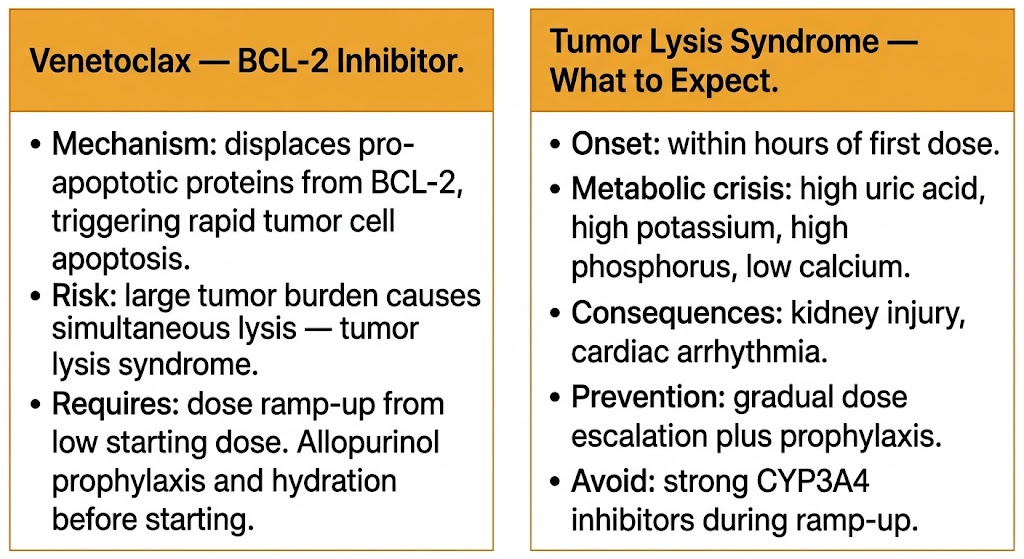
BCL-2 is an anti-apoptotic protein that sequesters pro-apoptotic proteins on the outer mitochondrial membrane, preventing apoptosis initiation. Its overexpression is a hallmark of chronic lymphocytic leukemia and many lymphoid malignancies. Venetoclax is a selective BCL-2 inhibitor (a BH3 mimetic) that displaces these pro-apoptotic proteins, triggering rapid, simultaneous apoptosis of BCL-2-dependent tumor cells.
This mechanism creates the defining clinical challenge: tumor lysis syndrome. When a large burden of BCL-2-dependent cells undergoes rapid simultaneous lysis, the resulting metabolic crisis — hyperuricemia, hyperkalemia, hyperphosphatemia, and hypocalcemia — can produce acute kidney injury, cardiac arrhythmia, and seizures within hours of the first dose. The mandatory management is a dose ramp-up schedule: beginning at 20 mg per day in week 1 and increasing to 50, 100, 200, then 400 mg per day over five weeks, with concurrent allopurinol or rasburicase prophylaxis, aggressive hydration, and laboratory monitoring at 6 to 8 hours after each dose increase.
Venetoclax is a cytochrome P450 3A4 substrate and P-glycoprotein substrate. Strong cytochrome P450 3A4 inhibitors dramatically increase venetoclax exposure: ketoconazole increases exposure approximately sixfold and clarithromycin approximately fivefold — both are contraindicated during the ramp-up phase. Azole antifungals commonly used in acute myeloid leukemia (for example, posaconazole) require venetoclax dose reduction to 70 mg. Venetoclax is approved in combination with obinutuzumab for chronic lymphocytic leukemia and with azacitidine or low-dose cytarabine for newly diagnosed acute myeloid leukemia in patients ineligible for intensive chemotherapy.
PARP1 and PARP2 repair single-strand DNA (deoxyribonucleic acid) breaks through the base excision repair pathway. When PARP is inhibited, these breaks accumulate and are converted to double-strand breaks during DNA replication. In cells with intact homologous recombination repair (the BRCA1 (breast cancer susceptibility gene 1) and BRCA2 (breast cancer susceptibility gene 2)-dependent pathway), double-strand breaks are accurately repaired. In cells with homologous recombination deficiency — due to germline or somatic BRCA1 or BRCA2 mutations — PARP inhibition leads to irreparable double-strand break accumulation and cell death. This is synthetic lethality: two individually tolerated deficiencies (PARP inhibition plus homologous recombination deficiency) combine to produce cell death selectively in cancer cells.
The approved PARP inhibitors are olaparib, rucaparib, and niraparib, indicated for BRCA1/2-mutant breast, ovarian, prostate, and pancreatic cancers. BRCA1/2 mutation testing (germline and somatic) is essential for patient selection. For ovarian cancer, homologous recombination deficiency testing provides additional selection information beyond BRCA status alone. Olaparib and rucaparib are cytochrome P450 3A4 substrates requiring dose reduction with strong inhibitors. Niraparib is metabolized predominantly by carboxylesterases, giving it fewer cytochrome P450-based drug interactions. Niraparib causes higher rates of thrombocytopenia (approximately 61 percent; grade 3 or 4 in approximately 29 percent) than the other agents, requiring weekly complete blood count monitoring for the first month. Class-wide toxicities include anemia, nausea, fatigue, and a small risk (1 to 2 percent) of treatment-emergent myelodysplastic syndrome or acute myeloid leukemia with prolonged use.
FMS-like tyrosine kinase 3 is a receptor tyrosine kinase that normally promotes myeloid progenitor differentiation. Activating FLT3 mutations occur in approximately 30 percent of acute myeloid leukemia cases — most commonly internal tandem duplications in the juxtamembrane domain (approximately 25 percent) and point mutations in the kinase domain (approximately 7 percent). FLT3 internal tandem duplication mutations confer a poor prognosis and are a required pharmacogenomic target, identified by FLT3 mutation testing at diagnosis.
Midostaurin is a multi-kinase inhibitor (FLT3, KIT, PDGFR, and protein kinase C) approved in combination with standard daunorubicin-cytarabine induction chemotherapy for newly diagnosed FLT3-mutant acute myeloid leukemia (RATIFY trial). It is metabolized by cytochrome P450 3A4; strong cytochrome P450 3A4 inhibitors including posaconazole (commonly used for antifungal prophylaxis in acute myeloid leukemia patients) increase midostaurin exposure and require monitoring. Gilteritinib is a selective FLT3 inhibitor approved for relapsed or refractory FLT3-mutant acute myeloid leukemia; it is active against both internal tandem duplication and kinase domain mutations. Both agents require QTc monitoring.
IDH1 and IDH2 mutations occur in approximately 6 to 10 percent and 8 to 15 percent of acute myeloid leukemia cases, respectively. These gain-of-function mutations generate the oncometabolite 2-hydroxyglutarate, which blocks normal myeloid differentiation and maintains a leukemic stem cell state. Ivosidenib (IDH1 inhibitor) and enasidenib (IDH2 inhibitor) are oral agents that suppress 2-hydroxyglutarate production and restore differentiation capacity. IDH1 or IDH2 mutation testing is required before initiating the respective inhibitor.
The most important clinical complication is differentiation syndrome — a potentially life-threatening inflammatory syndrome occurring in approximately 10 to 20 percent of patients, typically within 5 to 12 weeks of starting therapy. As leukemic blasts differentiate rapidly, they release cytokines causing fever, dyspnea, hypotension, pulmonary infiltrates, pleural and pericardial effusions, acute kidney injury, and peripheral edema. The clinical triad of unexplained dyspnea, fever, and bilateral pulmonary infiltrates in the first 12 weeks of IDH inhibitor therapy must trigger immediate evaluation. Treatment is dexamethasone 10 mg intravenously twice daily for at least three days or until symptom resolution. The IDH inhibitor is continued through mild-to-moderate differentiation syndrome under steroid cover and held only for severe manifestations. Both IDH inhibitors also prolong the QTc interval, requiring baseline and periodic electrocardiogram monitoring. Late initiation of corticosteroids for differentiation syndrome is associated with higher mortality.
Venetoclax Ramp-Up — Tumor Lysis Syndrome Prevention Is Mandatory
Never start venetoclax at full dose. The mandatory ramp-up schedule (20 → 50 → 100 → 200 → 400 mg over 5 weeks) is not optional. Allopurinol or rasburicase, aggressive intravenous hydration, and laboratory monitoring at 6 to 8 hours after each dose increase must be in place before the first dose. Strong cytochrome P450 3A4 inhibitors (ketoconazole, clarithromycin) are contraindicated during ramp-up. Posaconazole requires dose reduction to 70 mg venetoclax.
Section 4
Peripheral neuropathy, cardiovascular toxicity, and route-dependent safety
Multiple myeloma cells are uniquely dependent on proteasome function due to their high rate of immunoglobulin production, which generates a constant burden of misfolded protein. Proteasome inhibition overwhelms myeloma cells with an unfolded protein response, triggering apoptosis. Three proteasome inhibitors are approved, differing in route, binding reversibility, and toxicity profile.
Bortezomib is a dipeptide boronic acid that reversibly inhibits the chymotrypsin-like activity of the 26S proteasome. It is approved for newly diagnosed and relapsed/refractory multiple myeloma and mantle cell lymphoma. Bortezomib is administered intravenously or subcutaneously; subcutaneous administration produces equivalent systemic exposure with dramatically lower peripheral neuropathy — grade 3 or higher peripheral neuropathy approximately 6 percent subcutaneous versus 16 percent intravenous — making the subcutaneous route preferred in all eligible patients. Bortezomib is metabolized by cytochrome P450 3A4 and cytochrome P450 2C19. Concurrent use with green tea extracts (epigallocatechin gallate) directly antagonizes the boronic acid pharmacophore and is contraindicated.
Peripheral neuropathy is the dose-limiting cumulative toxicity of bortezomib, predominantly a painful sensory neuropathy, sometimes with autonomic features (orthostatic hypotension, constipation). Dose modification is graded: grade 1 with pain or grade 2 — reduce dose by 25 percent; grade 2 with pain or grade 3 — hold until grade 1 or better, then restart at 25 percent reduction; grade 4 — permanently discontinue. Duloxetine has evidence for management of painful chemotherapy-induced peripheral neuropathy. Weekly (rather than twice-weekly) dosing substantially reduces peripheral neuropathy incidence and is used in maintenance settings. Herpes zoster reactivation prophylaxis with acyclovir or valacyclovir is mandatory throughout bortezomib therapy and for at least three months after completion.
Carfilzomib irreversibly inhibits the same 26S proteasome beta-5 subunit as bortezomib, providing sustained proteasome inhibition between doses. It is administered intravenously only (no oral or subcutaneous formulation), as a 10 to 30 minute infusion, initially twice weekly. Its major distinguishing toxicity is cardiovascular — cardiomyopathy and cardiac failure in approximately 7 to 25 percent of patients, hypertension in approximately 14 percent, and higher arterial thromboembolism rates compared to bortezomib. Mandatory management includes adequate hydration before each infusion (250 to 500 mL intravenous normal saline before and after each dose) and dose interruption or discontinuation for grade 3 or higher cardiac events. New York Heart Association class III or IV heart failure is an exclusion criterion. Peripheral neuropathy is substantially less common with carfilzomib than bortezomib.
Ixazomib is the first oral proteasome inhibitor, a boronic acid analog that reversibly inhibits the beta-5 subunit, dosed once weekly on days 1, 8, and 15 of a 28-day cycle. Oral bioavailability is approximately 58 percent; it is metabolized by multiple cytochrome P450 enzymes, so interactions with individual cytochrome P450 inhibitors are less pronounced than with bortezomib. Ixazomib is approved with lenalidomide and dexamethasone for relapsed or refractory multiple myeloma, enabling all-oral outpatient therapy. Tolerability is favorable compared to the intravenous agents: peripheral neuropathy is less frequent and severe, and cardiovascular toxicity is not a concern. Gastrointestinal toxicity (nausea, diarrhea) and rash are the main adverse effects. Strong cytochrome P450 3A4 inducers substantially reduce ixazomib exposure and should be avoided.
Proteasome Inhibitor Comparison
Bortezomib Neuropathy Grading
Section 5
Cereblon mechanism, teratogenicity, venous thromboembolism prophylaxis, and risk evaluation and mitigation strategy requirements
The immunomodulatory drugs thalidomide, lenalidomide, and pomalidomide share a common molecular target — the cereblon substrate receptor of the CRL4 (Cullin-RING ligase 4)-cereblon ubiquitin ligase complex — and a teratogenicity profile so severe that all three require mandatory risk evaluation and mitigation strategy programs in the United States.
Immunomodulatory drugs bind cereblon and redirect the CRL4-cereblon ubiquitin ligase to target neo-substrates for proteasomal degradation — proteins not normally degraded by this complex, including the transcription factors Ikaros (IKZF1) and Aiolos (IKZF3). Depletion of Ikaros and Aiolos kills myeloma cells directly and simultaneously enhances T-cell and natural killer cell function, producing combined direct cytotoxic and immunostimulatory effects. In myelodysplastic syndrome with isolated deletion of chromosome 5q, lenalidomide degrades casein kinase 1 alpha 1, which is encoded on the deleted 5q chromosome; because these cells have only one copy of the gene, further reduction in the enzyme is lethal only to the del(5q) clone.
Teratogenicity results from cereblon-mediated degradation of transcription factors essential for limb bud and cardiac development. A single dose of thalidomide during the critical window of limb bud development (days 24 to 36 post-fertilization) can produce severe limb malformations and cardiac defects. The absolute risk of fetal abnormality is approximately 20 to 50 percent in exposed pregnancies.
Thalidomide has approximately 90 percent oral bioavailability, undergoes spontaneous hydrolysis and hepatic hydroxylation without significant cytochrome P450 enzyme involvement, and is not renally cleared. It is approved with dexamethasone for newly diagnosed multiple myeloma in transplant-ineligible patients. Primary toxicities are peripheral neuropathy (cumulative, predominantly sensory; monitor clinically at each visit), somnolence, constipation, and teratogenicity. The STEPS (System for Thalidomide Education and Prescribing Safety) risk evaluation and mitigation strategy program requires mandatory prescriber and patient registration, two forms of contraception for women of childbearing potential, regular pregnancy testing, and a maximum 28-day dispensing window per prescription.
Lenalidomide is approximately 50 to 100-fold more potent than thalidomide against myeloma cells, with substantially less neurologic toxicity. Oral bioavailability is approximately 65 to 70 percent, and the drug is predominantly eliminated unchanged in the urine (approximately 68 percent). Dose reduction is mandatory when creatinine clearance falls below 60 mL per minute. Lenalidomide is approved for multiple myeloma (frontline and maintenance after autologous stem cell transplant), myelodysplastic syndrome with isolated del(5q), and chronic lymphocytic leukemia in combination regimens.
The dominant toxicity is myelosuppression — neutropenia (grade 3 or 4 in approximately 30 to 50 percent) and thrombocytopenia. Complete blood count monitoring is required weekly for the first eight weeks, then monthly. Venous thromboembolism is a class-wide risk occurring in approximately 15 to 26 percent of patients receiving lenalidomide with dexamethasone without prophylaxis; it is potentiated by dexamethasone, erythropoietin, and prior venous thromboembolism history. The REVLIMID risk evaluation and mitigation strategy program has the same contraception and pregnancy testing requirements as the thalidomide STEPS program.
Pomalidomide is the most potent of the three immunomodulatory drugs and retains activity in lenalidomide-refractory myeloma. Oral bioavailability is approximately 73 percent; it is metabolized by cytochrome P450 1A2 and cytochrome P450 3A4, and smoking (which induces cytochrome P450 1A2) may reduce pomalidomide exposure. It is approved with dexamethasone for relapsed or refractory multiple myeloma after at least two prior therapies including lenalidomide and a proteasome inhibitor. The POMALYST risk evaluation and mitigation strategy program requirements parallel lenalidomide's. Toxicity is similar to lenalidomide — myelosuppression and venous thromboembolism dominate — and mandatory thromboprophylaxis applies.
Venous thromboembolism prophylaxis selection follows a risk stratification algorithm: aspirin (81 to 325 mg daily) is appropriate for low-risk patients (immunomodulatory drug monotherapy or with low-dose dexamethasone only, no additional risk factors); therapeutic anticoagulation with low-molecular-weight heparin or a direct oral anticoagulant is required for high-risk patients (high-dose dexamethasone, multi-agent combinations, prior venous thromboembolism, immobility, or central venous catheter). Prophylaxis is maintained throughout immunomodulatory drug therapy.
IMiD Risk Evaluation and Mitigation Strategy — Non-Negotiable Requirements
All three immunomodulatory drugs (thalidomide, lenalidomide, pomalidomide) require enrollment of both prescriber and patient in the respective risk evaluation and mitigation strategy program before any drug can be dispensed. Women of childbearing potential must use two forms of contraception and undergo pregnancy testing within 10 to 14 days before each prescription. Male patients must use condoms during therapy and for at least one week after the last dose. The 28-day dispensing limit applies to all three agents.
Section 6
Companion diagnostics, cross-class toxicities, and high-yield decision points
The breadth of targeted agents in this module demands systematic thinking about molecular prerequisites, overlapping toxicities across drug classes, and the clinical emergencies unique to specific agents.
Several agents in this module require confirmed molecular testing before prescribing. Alpelisib requires PIK3CA mutation testing (tissue therascreen assay or plasma Guardant360 assay). PARP inhibitors in ovarian cancer require BRCA1/2 testing and, for expanded indication, homologous recombination deficiency testing. FLT3 inhibitors require FLT3 mutation testing (internal tandem duplication and kinase domain subtypes) at acute myeloid leukemia diagnosis. IDH1 or IDH2 inhibitors require the respective IDH mutation confirmed. BRAF/MEK inhibitors require BRAF V600E mutation testing; squamous cell carcinoma histology is a contraindication for BRAF inhibition in non-small cell lung cancer due to RAS-mutant paradoxical activation risk. In BRAF V600E-mutant colorectal cancer, RAS mutation testing must also confirm wild-type RAS before prescribing encorafenib-cetuximab.
Multiple agents prolong the QTc interval: ribociclib (mandatory baseline and follow-up electrocardiogram protocol; hold if QTc exceeds 480 milliseconds; discontinue permanently if QTc exceeds 500 milliseconds recurrently), enasidenib and ivosidenib (baseline and monthly electrocardiogram for the first three months), gilteritinib, and vemurafenib. Patients receiving any of these agents who also take antiarrhythmics, antipsychotics, azithromycin, fluoroquinolones, or high-dose ondansetron require careful electrocardiogram monitoring. Substituting non-QTc-prolonging alternatives where possible reduces cumulative risk.
Three distinct mechanisms generate drug-induced hyperglycemia in this module. Alpelisib causes insulin resistance through PI3K-alpha inhibition in adipose tissue, liver, and muscle; management escalates from dietary modification to metformin to insulin. Mechanistic target of rapamycin inhibitors (everolimus, temsirolimus) impair both insulin secretion and sensitivity; monitoring fasting glucose before each cycle is standard. Corticosteroid-associated hyperglycemia from dexamethasone (used with immunomodulatory drugs and bortezomib-based regimens) is typically postprandial, responding to short-acting insulin at mealtimes. Pre-existing diabetes requires intensified management before any of these agents is started.
Proteasome inhibitors substantially increase herpes zoster reactivation risk — estimated at approximately 13 percent without prophylaxis — requiring acyclovir or valacyclovir throughout therapy and for at least three months after completion. Immunomodulatory drugs in combination with steroids or proteasome inhibitors carry additional herpes zoster risk and antiviral prophylaxis should be co-prescribed. Idelalisib requires mandatory Pneumocystis jirovecii pneumonia prophylaxis with trimethoprim-sulfamethoxazole (or dapsone or atovaquone in sulfa-allergic patients) and cytomegalovirus monitoring throughout treatment. Bruton's tyrosine kinase inhibitors increase risk of invasive fungal infections and atypical organisms in heavily pretreated patients; fungal prophylaxis is considered in high-risk individuals.
Clinical Emergency Recognition
Mandatory Prophylaxis Summary
| Author / Organization | Title | Source |
|---|---|---|
| Chapman PB, Hauschild A, Robert C, et al. | Improved survival with vemurafenib in melanoma with BRAF V600E mutation | N Engl J Med. 2011;364(26):2507-2516 |
| Robert C, Karaszewska B, Schachter J, et al. | Improved overall survival in melanoma with combined dabrafenib and trametinib | N Engl J Med. 2015;372(1):30-39 |
| Finn RS, Crown JP, Lang I, et al. | The cyclin-dependent kinase 4/6 inhibitor palbociclib in combination with letrozole versus letrozole alone as first-line treatment of oestrogen receptor-positive, HER2-negative, advanced breast cancer (PALOMA-1/TRIO-18) | Lancet Oncol. 2015;16(1):25-35 |
| Furman RR, Sharman JP, Coutre SE, et al. | Idelalisib and rituximab in relapsed chronic lymphocytic leukemia | N Engl J Med. 2014;370(11):997-1007 |
| Motzer RJ, Escudier B, Oudard S, et al. | Efficacy of everolimus in advanced renal cell carcinoma: a double-blind, randomised, placebo-controlled phase III trial | Lancet. 2008;372(9637):449-456 |
| Byrd JC, Hillmen P, Ghia P, et al. | Acalabrutinib versus ibrutinib in previously treated chronic lymphocytic leukemia: results of the first randomized phase III trial | J Clin Oncol. 2021;39(31):3441-3452 |
| Stilgenbauer S, Eichhorst B, Schetelig J, et al. | Venetoclax in relapsed or refractory chronic lymphocytic leukaemia with 17p deletion: a multicentre, open-label, phase 2 study | Lancet Oncol. 2016;17(6):768-778 |
| Robson M, Im SA, Senkus E, et al. | Olaparib for metastatic breast cancer in patients with a germline BRCA mutation | N Engl J Med. 2017;377(6):523-533 |
| Stone RM, Mandrekar SJ, Sanford BL, et al. | Midostaurin plus chemotherapy for acute myeloid leukemia with a FLT3 mutation | N Engl J Med. 2017;377(5):454-464 |
| Richardson PG, Barlogie B, Berenson J, et al. | A phase 2 study of bortezomib in relapsed, refractory myeloma | N Engl J Med. 2003;348(26):2609-2617 |
| Dimopoulos MA, Goldschmidt H, Niesvizky R, et al. | Carfilzomib or bortezomib in relapsed or refractory multiple myeloma (ENDEAVOR): an interim overall survival analysis | Lancet Oncol. 2017;18(10):1327-1337 |
| Kronke J, Udeshi ND, Narla A, et al. | Lenalidomide causes selective degradation of IKZF1 and IKZF3 in multiple myeloma cells | Science. 2014;343(6168):301-305 |
| Palumbo A, Rajkumar SV, Dimopoulos MA, et al. | Prevention of thalidomide- and lenalidomide-associated thrombosis in myeloma | Leukemia. 2008;22(2):414-423 |