Dual topoisomerase inhibition, concentration-dependent killing, and spectrum evolution across generations
Fluoroquinolones are synthetic bactericidal antibiotics that target two essential bacterial enzymes—deoxyribonucleic acid (DNA) gyrase and topoisomerase IV—both required for deoxyribonucleic acid replication and cell division. The evolution from first-generation agents to modern respiratory fluoroquinolones reflects progressive broadening of spectrum through structural modification.
Fluoroquinolones inhibit two essential bacterial enzymes—DNA gyrase and topoisomerase IV—both required for DNA replication. By trapping these enzymes in complexes with broken DNA strands, fluoroquinolones generate lethal double-strand DNA breaks and are rapidly bactericidal.
The primary target differs between organism types. In gram-negative bacteria, deoxyribonucleic acid gyrase is the primary target; in gram-positive bacteria, topoisomerase IV is primary. This means a single mutation in the primary target substantially reduces susceptibility. Agents with more balanced activity against both targets, such as moxifloxacin, suppress resistance emergence more effectively because simultaneous mutations in both targets are required for survival.
Fluoroquinolones are concentration-dependent killers. The pharmacodynamic driver of efficacy is the ratio of area under the concentration-time curve to the minimum inhibitory concentration (AUC/MIC). These kinetics justify once-daily high-dose dosing strategies.
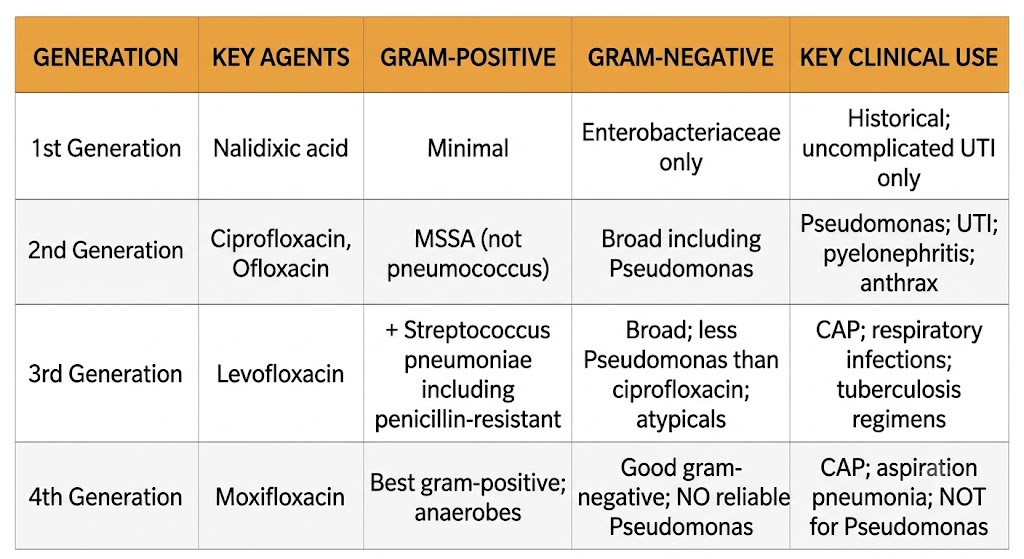
First-generation agents (nalidixic acid) were narrow-spectrum, active primarily against gram-negative Enterobacteriaceae, and are now largely of historical interest. Second-generation agents (ciprofloxacin, ofloxacin) represent the transformative advance: ciprofloxacin offers broad gram-negative coverage including reliable antipseudomonal activity, moderate gram-positive coverage adequate for methicillin-susceptible Staphylococcus aureus, and activity against atypical intracellular pathogens (Legionella pneumophila, Mycoplasma pneumoniae, Chlamydophila pneumoniae). Ciprofloxacin remains the fluoroquinolone of choice for Pseudomonas aeruginosa infections and for complicated urinary tract infection and pyelonephritis.
Third-generation agents (levofloxacin) extend reliable activity to Streptococcus pneumoniae including penicillin-resistant strains, while retaining broad gram-negative coverage—though with modestly less antipseudomonal potency than ciprofloxacin. Fourth-generation agents (moxifloxacin, gemifloxacin) achieve the broadest spectrum within the class, adding clinically relevant anaerobic coverage (including many Bacteroides fragilis strains) and enhanced gram-positive activity. The critical trade-off: moxifloxacin loses reliable antipseudomonal activity and must not be used when Pseudomonas coverage is required.
Oral bioavailability, tissue distribution, elimination, and clinically significant interactions
Fluoroquinolones are characterized by excellent oral bioavailability, large volumes of distribution reflecting extensive tissue penetration, and elimination pathways that vary between agents and determine dosing requirements in organ impairment. Their pharmacokinetic profile makes them among the most versatile antibiotics for oral-to-intravenous interchange.
Levofloxacin achieves near-complete oral bioavailability (approximately 99%), allowing oral dosing to deliver plasma concentrations essentially equivalent to intravenous administration at the same dose. Moxifloxacin approaches 89% oral bioavailability, while ciprofloxacin achieves approximately 70–85%. These values support routine oral-to-intravenous interchange for levofloxacin and moxifloxacin on a one-to-one dose basis. A patient with a functioning gastrointestinal tract who can tolerate oral medications should in most cases receive the oral formulation, as plasma exposures are nearly equivalent and intravenous access carries its own risks.
Tissue penetration is extensive across the class. Lung concentrations exceed plasma by two- to fivefold. Ciprofloxacin achieves prostate concentrations several times higher than plasma, supporting its use in prostatitis. Intracellular accumulation within phagocytes is clinically relevant for infections caused by obligate or facultative intracellular pathogens (Legionella, Mycobacterium, Chlamydophila, Brucella). Bone penetration supports oral fluoroquinolones for osteomyelitis step-down therapy. Cerebrospinal fluid penetration is moderate (10–40% of plasma), insufficient for bacterial meningitis.
Ciprofloxacin and levofloxacin are eliminated predominantly by renal excretion of unchanged drug and require dose adjustment in significant renal impairment. For levofloxacin, the approach is to reduce dosing frequency rather than reduce each individual dose, to maintain peak concentrations that drive concentration-dependent killing. Moxifloxacin is eliminated primarily by hepatic conjugation with biliary and fecal excretion; it does not require dose adjustment in renal impairment but should be used cautiously in severe hepatic impairment.
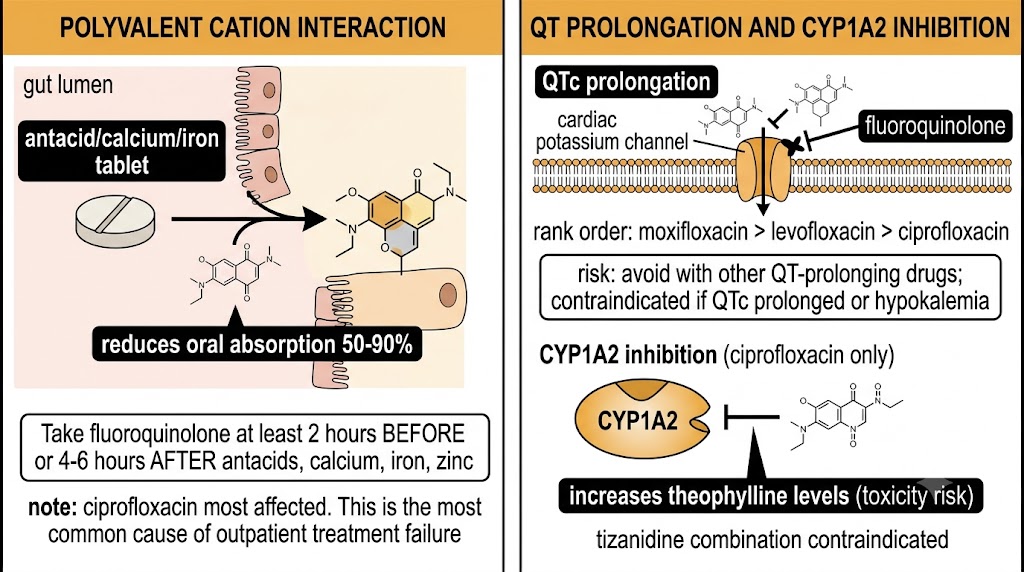
The most clinically important drug interaction is chelation by polyvalent cations. Aluminum- and magnesium-containing antacids, calcium supplements, iron preparations, zinc-containing multivitamins, and sucralfate form insoluble complexes with fluoroquinolones in the gastrointestinal lumen, reducing oral absorption by 50–90%. Ciprofloxacin is most severely affected. The interaction is managed by timing: oral fluoroquinolones should be administered at least two hours before or four to six hours after any polyvalent cation-containing product. Clinicians must counsel patients explicitly—patients commonly take antacids or calcium supplements without recognizing the impact on antibiotic absorption, and this interaction is among the most common causes of fluoroquinolone treatment failure in the outpatient setting.
All fluoroquinolones prolong the corrected QT interval (QTc) by a direct cardiac effect. The rank order for QTc prolongation is moxifloxacin greater than levofloxacin greater than ciprofloxacin. Co-administration with other QT-prolonging agents (antiarrhythmics, antipsychotics, certain antiemetics) creates additive risk for torsades de pointes. Moxifloxacin is contraindicated in patients with known QTc prolongation, uncorrected hypokalemia, or concomitant use of other QT-prolonging drugs.
Ciprofloxacin inhibits the cytochrome P450 1A2 (CYP1A2) enzyme, increasing plasma concentrations of theophylline, caffeine, clozapine, and tizanidine. Co-administration with theophylline can precipitate theophylline toxicity; the ciprofloxacin-tizanidine combination is contraindicated due to severe hypotension risk. Levofloxacin and moxifloxacin have minimal CYP1A2 inhibitory activity.
Tendinopathy, peripheral neuropathy, central nervous system toxicity, QTc prolongation, dysglycemia, and aortic risk
Fluoroquinolones carry one of the most extensive collections of serious adverse effects of any antibiotic class, culminating in multiple United States Food and Drug Administration (FDA) black box warnings. Understanding these toxicities and the patient populations at highest risk is essential before reaching for this drug class.
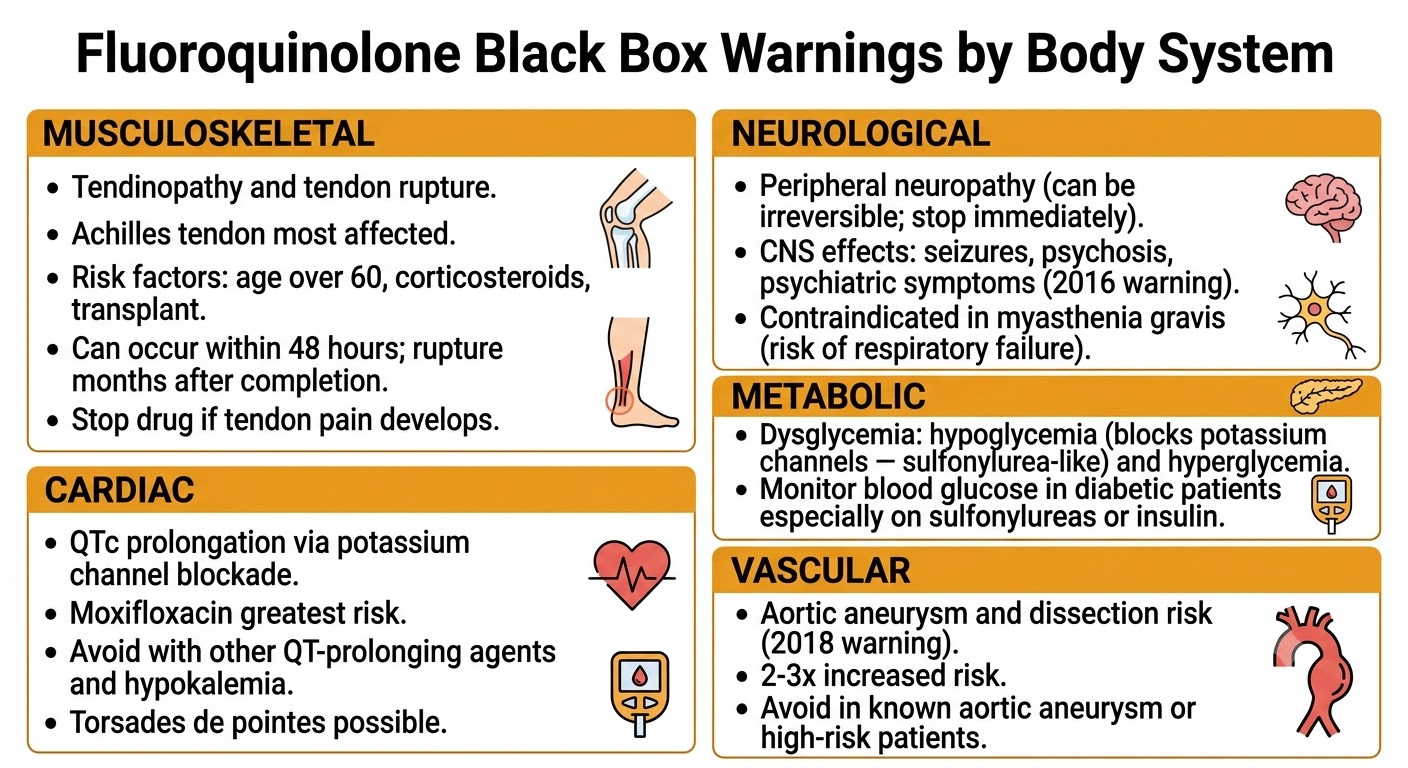
Fluoroquinolones impair collagen synthesis and promote collagen degradation in tendon tissue, most commonly affecting the Achilles tendon because of its relatively poor vascular supply and high mechanical load. The incidence of tendon rupture is approximately two to four times higher in fluoroquinolone users than in matched controls. Risk is dramatically increased in patients over age 60, in those receiving concurrent systemic corticosteroids, and in renal transplant recipients. Tendinopathy can occur within 48 hours of starting therapy, and rupture can occur up to several months after a course is completed. Patients must be counseled to stop the drug immediately and avoid weight-bearing if Achilles pain or swelling develops.
Fluoroquinolones can cause serious peripheral neuropathy including sensory, motor, or mixed symptoms (pain, burning, tingling, numbness, weakness) that may begin within days of starting therapy and can be irreversible, persisting long after the drug is discontinued. Patients with pre-existing peripheral neuropathy are at particular risk and represent a relative contraindication. Any new onset of neuropathic symptoms during fluoroquinolone therapy should prompt immediate discontinuation.
Central nervous system adverse effects range from mild insomnia, dizziness, and headache to seizures, toxic psychosis, and psychiatric disturbances (agitation, anxiety, confusion, depression, hallucinations, suicidal ideation). The FDA black box warning was extended in 2016 to explicitly include these psychiatric effects. Seizure risk is elevated in patients with pre-existing seizure disorders and in those taking theophylline or nonsteroidal anti-inflammatory drugs, both of which independently lower seizure threshold.
Fluoroquinolone use is contraindicated in patients with known myasthenia gravis because these agents block neuromuscular transmission and can precipitate life-threatening respiratory failure.
Fluoroquinolones can cause both hypoglycemia and hyperglycemia. Hypoglycemia results from stimulation of insulin secretion and is particularly dangerous in diabetic patients receiving concurrent sulfonylurea or insulin therapy. Blood glucose should be monitored closely in diabetic patients receiving fluoroquinolones, particularly when initiated or discontinued.
Multiple epidemiological studies have demonstrated a two- to threefold increased risk of aortic aneurysm or dissection in patients receiving fluoroquinolones compared to matched controls, with the strongest signal in patients with pre-existing aortic aneurysm, hypertension, or Marfan syndrome. The FDA added this warning to the black box in 2018. Fluoroquinolones should be avoided in patients with known aortic aneurysm or at high risk unless no alternative is available.
The FDA stated in 2016 that the serious risks of fluoroquinolones generally outweigh the benefits for sinusitis, bronchitis, and uncomplicated urinary tract infection, conditions for which effective and safer alternatives exist. Fluoroquinolones should be reserved for patients who have no other treatment options for these mild infections. Prescribing ciprofloxacin for uncomplicated cystitis when trimethoprim-sulfamethoxazole, nitrofurantoin, or fosfomycin would be effective is now explicitly discouraged by regulatory guidance, not merely by antimicrobial stewardship preference.
Indication-driven agent selection, resistance pathways, and stewardship
Rational fluoroquinolone prescribing requires matching the agent to the infection based on spectrum, pharmacokinetic target attainment at the site of infection, local resistance patterns, and patient-specific contraindications. Resistance has become a critical problem driven by both chromosomal mutations and horizontally transferable plasmid-mediated resistance genes.
Ciprofloxacin is the preferred fluoroquinolone for Pseudomonas aeruginosa infections, complicated urinary tract infection, pyelonephritis, intra-abdominal infections (combined with metronidazole), osteomyelitis step-down therapy, and post-exposure prophylaxis for anthrax. Uncomplicated cystitis should be treated with nitrofurantoin, trimethoprim-sulfamethoxazole, or fosfomycin in preference to fluoroquinolones unless local resistance rates to those agents exceed 20%.
Levofloxacin and moxifloxacin are the respiratory fluoroquinolones: they cover the full range of community-acquired pneumonia pathogens including Streptococcus pneumoniae (including penicillin-resistant strains), Haemophilus influenzae, Moraxella catarrhalis, and atypical organisms (Mycoplasma pneumoniae, Chlamydophila pneumoniae, Legionella pneumophila) in a single agent. Levofloxacin at 750 mg daily is preferred when Pseudomonas coverage is required; moxifloxacin is preferred when anaerobic coverage is needed, such as in aspiration pneumonia. Levofloxacin and moxifloxacin are also used in second-line and multidrug-resistant tuberculosis regimens.
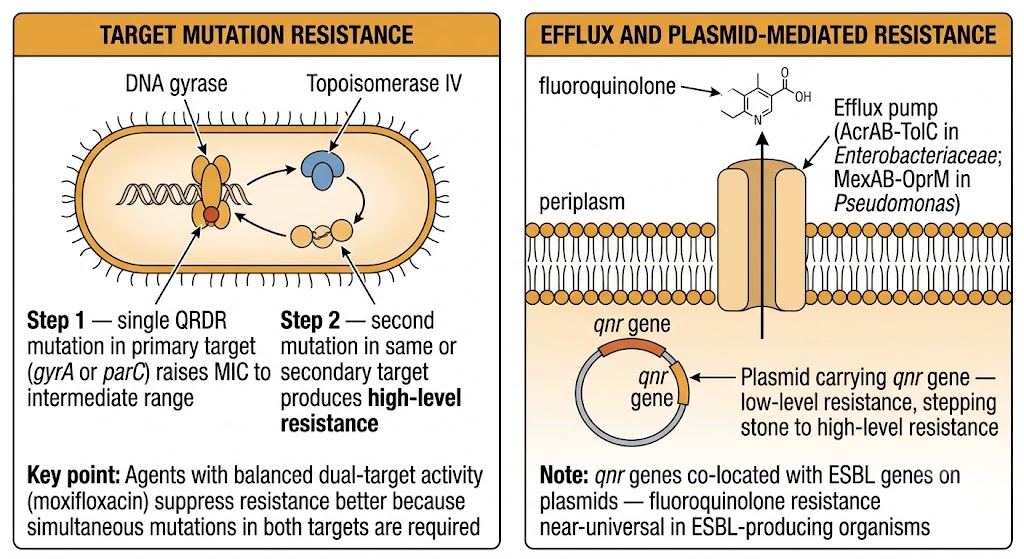
The most important resistance mechanism is sequential mutations in the genes encoding DNA gyrase and topoisomerase IV. A single mutation in the primary target gene reduces susceptibility modestly, often raising the minimum inhibitory concentration into the intermediate range. A second mutation in the same target or a mutation in the secondary target confers high-level resistance. This stepwise pattern means agents with balanced dual-target activity (moxifloxacin) suppress resistance emergence more effectively, since simultaneous mutations in both targets are required for survival.
Efflux pump overexpression actively extrudes fluoroquinolones from the bacterial cell, reducing intracellular drug concentrations below the threshold required for target inhibition. In gram-negative organisms, multidrug efflux systems can be overexpressed, often conferring simultaneous resistance to multiple antibiotic classes. Porin loss acts synergistically by reducing drug entry.
Plasmid-mediated quinolone resistance genes have fundamentally altered the epidemiology of fluoroquinolone resistance by enabling horizontal gene transfer between species. Plasmid-mediated quinolone resistance genes encode proteins that reduce fluoroquinolone binding to target enzymes, typically conferring low-level resistance that facilitates selection of high-level chromosomal mutations. Fluoroquinolone resistance genes frequently co-reside on plasmids carrying extended-spectrum beta-lactamase genes, making fluoroquinolone resistance nearly universal in extended-spectrum beta-lactamase-producing organisms.
| Author / Organization | Title | Source |
|---|---|---|
| Hooper DC, Jacoby GA | Mechanisms of drug resistance: quinolone resistance | Ann N Y Acad Sci. 2015;1354:12-31 |
| Aldred KJ, Kerns RJ, Osheroff N | Mechanism of quinolone action and resistance | Biochemistry. 2014;53(10):1565-1574 |
| Hooper DC, Jacoby GA | Topoisomerase inhibitors: fluoroquinolone mechanisms of action and resistance | Cold Spring Harb Perspect Med. 2016;6(9):a025320 |
| Craig WA | Pharmacokinetic/pharmacodynamic parameters: rationale for antibacterial dosing of mice and men | Clin Infect Dis. 1998;26(1):1-12 |
| Mandell LA, Wunderink RG, Anzueto A, et al. | Infectious Diseases Society of America/American Thoracic Society consensus guidelines on the management of community-acquired pneumonia in adults | Clin Infect Dis. 2007;44(Suppl 2):S27-S72 |
| Gupta K, Hooton TM, Naber KG, et al. | International clinical practice guidelines for the treatment of acute uncomplicated cystitis and pyelonephritis in women | Clin Infect Dis. 2011;52(5):e103-e120 |
| Turnidge J | Pharmacokinetics and pharmacodynamics of fluoroquinolones | Drugs. 1999;58(Suppl 2):29-36 |
| Croom KF, Goa KL | Levofloxacin: a review of its use in the treatment of bacterial infections in the United States | Drugs. 2003;63(24):2769-2802 |
| Neuhofel AL, Wilton JH, Victory JM, Hejmanowski LG, Amsden GW | Lack of bioequivalence of ciprofloxacin when administered with calcium-fortified orange juice: a new twist on an old interaction | J Clin Pharmacol. 2002;42(4):461-466 |
| Owens RC Jr, Ambrose PG | Antimicrobial safety: focus on fluoroquinolones | Clin Infect Dis. 2005;41(Suppl 2):S144-S157 |
| Noel GJ, Natarajan J, Chien S, Hunt TL, Goodman DB, Abels R | Effects of three fluoroquinolones on QT interval in healthy adults after single doses | Clin Pharmacol Ther. 2003;73(4):292-303 |
| FDA Drug Safety Communication | FDA updates warnings for oral and injectable fluoroquinolone antibiotics due to disabling side effects | US Food and Drug Administration; July 26, 2016 |
| van der Linden PD, Sturkenboom MC, Herings RM, Leufkens HG, Stricker BH | Fluoroquinolones and risk of Achilles tendon disorders: case-control study | BMJ. 2002;324(7349):1306-1307 |
| Lee CC, Lee MT, Chen YS, Lee SH, Chen SC, Chang SC | Risk of aortic dissection and aortic aneurysm in patients taking oral fluoroquinolone | JAMA Intern Med. 2015;175(11):1839-1847 |
| Mohr JF, McKinnon PS, Peymann PJ, et al. | A retrospective, comparative evaluation of dysglycemias in hospitalized patients receiving gatifloxacin, levofloxacin, ciprofloxacin, or ceftriaxone | Pharmacotherapy. 2005;25(10):1303-1309 |
| Jacoby GA | Mechanisms of resistance to quinolones | Clin Infect Dis. 2005;41(Suppl 2):S120-S126 |